
For a commercial contractor, the plan has to fit the work you can take on and the way buyers choose firms. A company page can support a developer checking a referral. A service page can bring in a buyer searching for a contractor. Neither does the same job as your BD lead's relationship with an owner.
If you want the monthly work handled, our construction marketing agency covers the website, search, ads and follow-up you choose. This guide gives your team the plan behind that work.
Choose the sector and buyer
Start with where you'd like the next good project to come from. Name the building type, geography and role you can serve. “More commercial work” is too wide to guide a page, campaign or relationship list.
Try this planning example: your firm wants work from self-storage operators converting existing retail buildings. The buyer might be the operator's development lead. They need to see that your team can handle the conversion scope, discuss the site and work with the project team through the next phase.
That gives you something to build around. Your priority evidence is relevant conversion work. Your first conversation asks about the building, stage and next decision. A generic “we build everything” message would make that buyer do the sorting.
Ask the operations team where capacity is available. Which PM could take the work? Which region can the team serve? What delivery role fits? A full backlog in one sector might make another pursuit look attractive, but the people and experience still have to fit it.
Build a one-page plan
Write the plan on one page your BD lead and operations team will read. Keep it close enough to the work that someone can act on it this week.
| Decision | What to write down | Owner |
|---|---|---|
| Work wanted | Building type, role, region and capacity window. | Leadership and operations. |
| Buyer | Organization type and person making the next decision. | Business development. |
| Evidence | Relevant projects and the company role on each. | PM with marketing support. |
| First page | The service or sector page that helps the buyer check you. | Website owner. |
| Two channels | Where you'll reach the buyer or support an existing relationship. | Marketing and BD. |
| Next step | The conversation or project outline you're asking for. | Business development. |
| Review | Date, effort spent and the next decision. | Leadership. |
For the storage conversion example, the page might explain adaptive reuse services and link to a comparable project. BD might keep a small company-owned account list. Search could help new buyers find the service, while project updates give existing contacts something relevant to open.
You're choosing a repeatable direction. You can still take a good project outside the plan. The point is to stop every new suggestion from becoming another unfinished marketing task.
Fix the evidence before promotion
Make sure a buyer can check the claim you're about to promote. If the plan says healthcare, the site needs more than the word healthcare in a list. It needs a page that explains the work and projects that show your part.
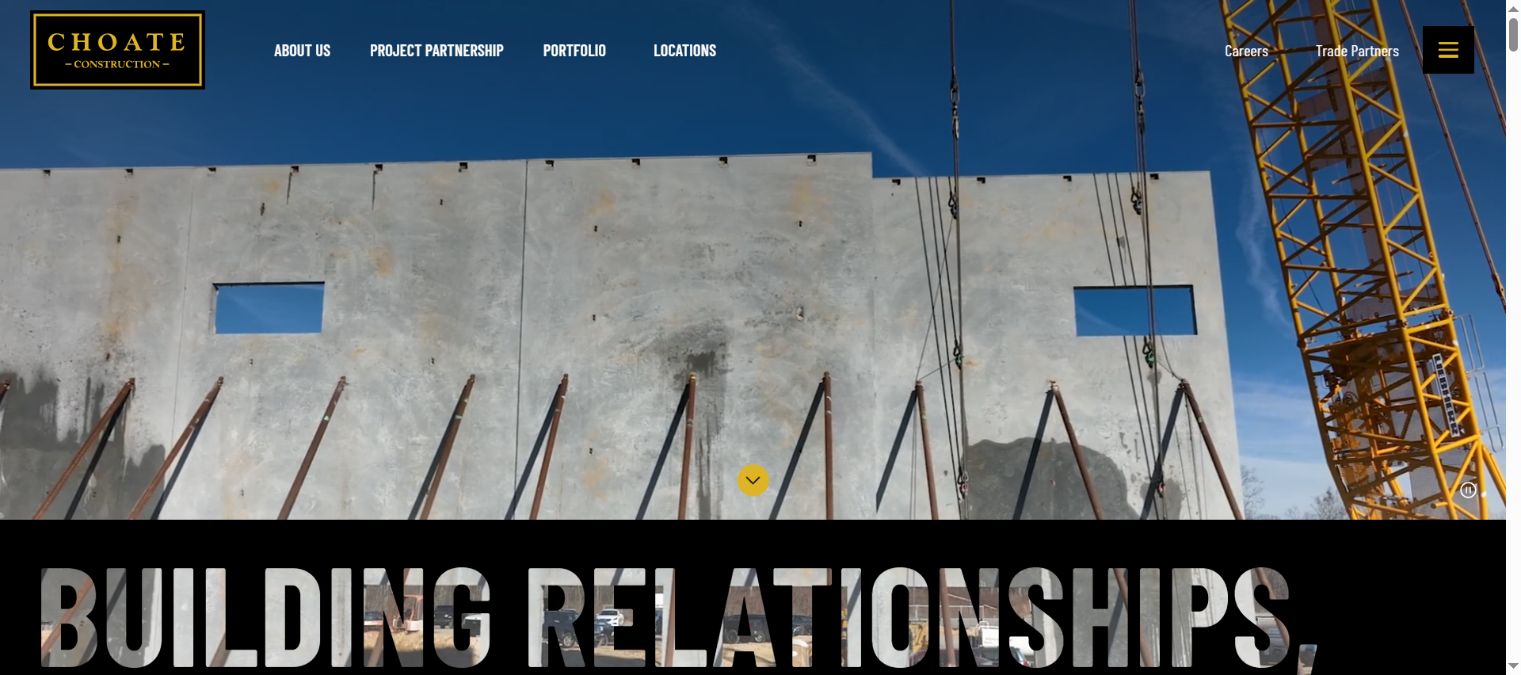
The Choate homepage connects its company presentation with ways into expertise, projects and trade relationships. That's a practical pattern for a planning discussion.
- What's good: visitors can move from the company introduction into a more specific task.
- What to copy: choose a clear destination for the buyer your plan names.
- What I'd change for your campaign: link directly to the relevant sector or project instead of asking every visitor to start at the homepage.
Gather the job facts from the PM. Explain the scope, delivery role and the decision the team handled. Use photos and details you're allowed to publish, with the other firms' roles credited accurately.
If this is your main weak point, compare the construction website design service. You may need a better service page and project presentation before another channel earns its budget.
Choose two channels you can run
I'd choose one way to be found and one way to stay relevant to existing contacts. For a clear searched service, that could be SEO plus project-led relationship follow-up. Where the buyer rarely starts with a broad search, the website may serve mainly as evidence after an introduction.
| Channel | Job in the plan | What has to be ready |
|---|---|---|
| SEO | Help new buyers find services and help referred buyers check the company. | Pages with relevant services, sectors and project evidence. |
| Search ads | Test demand for a specific service people already search for. | A matching page, budget and someone answering inquiries. |
| Relationship follow-up | Keep the company relevant to known owners, developers and project partners. | A reason to contact them and a named BD owner. |
| Project social posts | Give people a clear view of the team's work and thinking. | Approved material and a manageable review routine. |
Use the construction SEO guide for page work or the construction Google Ads guide for a paid search test. The construction social media plan shows how to keep project content manageable. Use the construction Facebook ads guide when the goal is to reach people before they search.
If ongoing organic search work is the purchase you're weighing, the construction SEO service explains the hire decision. Keep that decision separate from buying a list of tactics nobody has time to run.
Put 90 days on the calendar
Give each period an output and an owner. Here's a starting schedule you can adapt to your sales cycle.
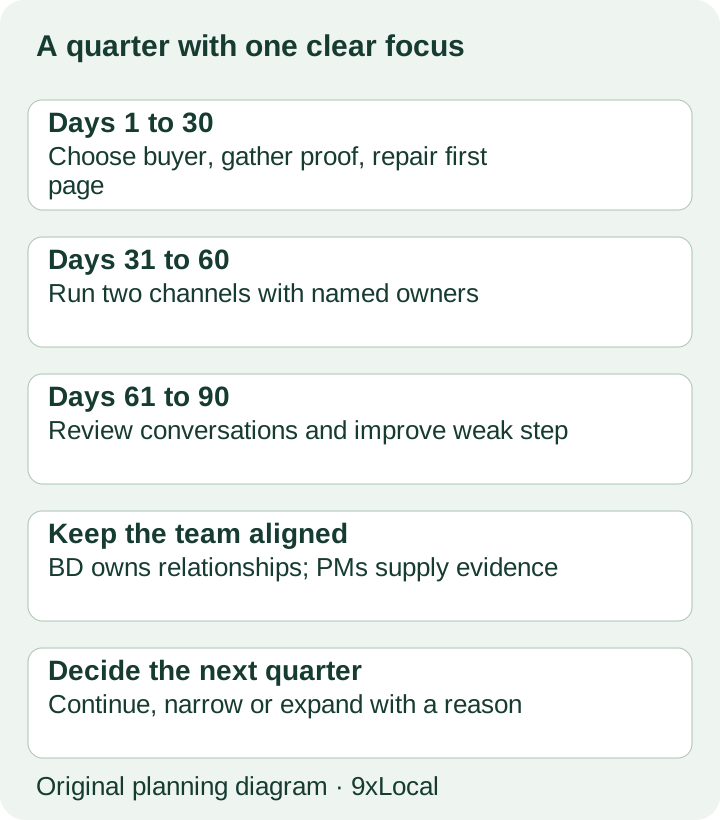
Days 1 to 30: get the first buyer path ready. Choose the sector, gather evidence and improve the priority page. Test the contact path. BD identifies the accounts or relationships the company wants to develop. Your team owns that list and the project judgment behind it.
Days 31 to 60: use the work. Run the two channels you chose. Send contacts a relevant project or service update when there's a reason. Keep the page accurate as questions come back. If nobody is answering inquiries, fix that before adding another campaign.
Days 61 to 90: make a decision. Read the inquiries and conversations together. Which organizations fit? What did buyers ask that the page failed to answer? Which activity took time without moving a relationship or project discussion forward?
Put the review on the calendar at the start. You'll learn more from a short meeting with the PM and BD lead than from a deck that only reports reach. The review should end with a task: improve a page, change the message, narrow the audience or keep a strong effort running.
Budget the work around a pursuit
Separate the marketing budget from the cost of pursuing a specific job. Both use company time, but they answer different questions. Marketing helps the company become known and checked. Pursuit work belongs to the team deciding whether and how to bid.
Example: a $900,000 project at an 18% gross margin has $162,000 in potential gross profit. Entering a 25% award chance gives $40,500 before pursuit cost. Forty hours at $110 an hour plus $600 in direct costs consumes $5,000. That leaves $35,500 after weighting the gross profit by that chance and subtracting the effort.
That chance is your assumption. At 10%, the same calculation leaves $11,200 after pursuit. At 40%, it leaves $59,800. A small change in the assumption changes the decision sharply, so start with the work you can verify.
The tool stops the money comparison when eligibility or delivery capacity fails. A good-looking expected value is no reason to price a job your company can't take on. Your team should clear the project requirements and available people first.
Use expected gross profit to compare assumptions, not as cash in the bank. A project award still needs delivery, cost control and payment. Keep the calculation alongside the decision, rather than turning project value into a marketing return claim.
Keep relationships moving
Give BD something better to send than “just checking in.” A project detail, a changed service capability or an answer to a previous question gives the contact a reason to reply.
Here's an original example for an existing contact who asked about conversion work. Adjust it to the conversation you've already had.
Follow-up after a sector discussion
Subject: Conversion experience for your next site review

Hi {name},

You mentioned that your team is reviewing existing retail buildings for storage use. I've attached the project overview we discussed, with our construction role and the scope we handled.

If a site reaches your next review stage, would a short conversation with our preconstruction lead help? Let me know the next decision date and I'll connect you.

{name}
{company}
Keep the response matched to the relationship. A new introduction needs context. An owner already working with your PM may need a direct project discussion. If you're sending commercial email, use truthful sender details, a clear purpose, a postal address and a working way to opt out.
Put a named person beside the next action. “Follow up next month” often becomes nobody's job. “BD lead sends the relevant project summary before the site review” tells the team what to do and why.
Review the pipeline without kidding yourself
Keep records, inquiries, bids and awards separate. A contact in a database hasn't asked your firm for anything. A project inquiry is a conversation to qualify. A submitted bid is further along, and an award is another step again.
Use the same group of projects when you compare spending with outcomes. A long-running relationship may have existed before the new website. Record how the marketing helped rather than assigning the whole award to the last page someone opened.
The construction leads guide gives your team a practical source and effort check. For the quarter review, I'd bring the effort spent, fitting conversations, live pursuits and the next decisions. Keep a short note about why an opportunity moved or stopped.
You'll also spot content gaps this way. If several owners ask which part of a project your company performed, improve the portfolio. If inquiries keep going to the wrong office, fix the contact path. Those are decisions your team can make now.
When to add another sector
Add a sector when you have the experience, delivery capacity and material to support it. Build a clear service and evidence path, then assign someone to keep it current.
You can use the construction website examples to brief that page. Start with the buyer's questions, rather than copying a larger firm's whole menu. A small, accurate sector page is easier to maintain than a broad claim the team has to explain away on every call.
Keep the first sector running while you test the next one. If the team is already struggling to supply photos and answer inquiries, adding pages will spread the same problem. Finish the working process before expanding it.
Frequently asked questions
What's the first construction marketing task?
Choose the sector and buyer, then improve the page they use to check your company. That choice makes the channel and message decisions much easier.
Do we need to post every day?
No. Choose a routine the project team can support. A clear project update with a relevant next step earns more attention from the right contact than a rushed filler post.
How much should we budget?
Start with a scoped quote, any media spend and your team's time. Use the pursuit worksheet for a separate job decision. Your backlog, capacity and buyer path should shape the spending choice.
Can a marketing partner find bids and write proposals?
Keep that work with your construction team or a provider specifically hired for it. 9xLocal's service markets the company through the website, search, ads and follow-up.
Turn the plan into monthly work
Bring a priority sector, a relevant project and the person who owns the next conversation. For help attracting and answering project inquiries, compare our construction lead generation services. Our construction marketing agency can handle the company marketing work you choose. Packages start from $297/month, with no setup or build fee. See the service and choose a first scope your team can keep moving.