
Commercial leads come in different forms. An owner asking about a project, a database record and a GC's bid invitation each need a different response. Know which one you're buying or receiving before judging the price.
Our construction lead generation services handle the company website, search, ads and follow-up you choose. This guide is for your team deciding which project sources and pursuits deserve its time. Our construction marketing agency covers the wider company service.
5 ways a project can reach you
Give the team a common language for what came in. That stops a contact count from becoming a project forecast.
| Source | What you have | First job for your team |
|---|---|---|
| Company website inquiry | A person has asked your firm about work. | Check the buyer, scope and project stage. |
| Introduction or existing relationship | Someone has connected you or raised a need. | Understand the context and next decision. |
| Project database | A record about a project, organization or contact. | Check freshness, fit and who is involved. |
| GC trade registration | A way into a firm's onboarding or prequalification process. | Read the requirements and submit through the firm's process. |
| Public notice or solicitation | Published project information with a defined process. | Check eligibility, deadlines and the official documents. |
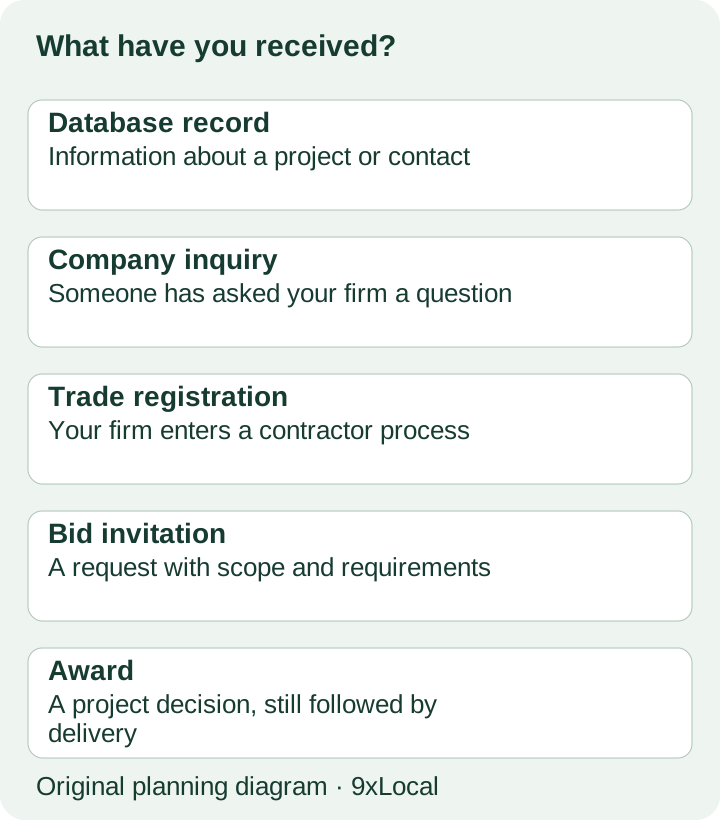
You can use more than one source. Keep its purpose clear. A database might help your BD lead research an account before a relationship develops. A website inquiry starts with someone reaching you. A notice may demand a formal response through a specified system.
Where I'd look first
I'd start with your existing owners, developers, architects and GC relationships, then check the company site they use to assess you. Those conversations can tell you which project types and stages you're positioned to pursue.
For a trade contractor, the next job might be keeping prequalification information current with the GCs you want to work for. For a design-build firm selling to owners, it might be a sector page and a more focused account plan. The first task changes with your role.
Then test one new source with a small, defined group of records or inquiries. Decide what fitting work means before you look at the results. Otherwise, it's easy to redefine the target around whatever the source supplied.
Use the construction marketing strategy guide to choose the buyer and sector. If your company website undersells your experience, the construction website examples give you patterns for presenting it better.
What construction leads cost
Price the object you're getting. A subscription for project information, a shared inquiry and a direct introduction aren't interchangeable purchases. Get the source's current quote and terms, then add the cost of using it.
Example: you pay a $350 access fee and spend six hours researching at $90 an hour. That's $890 in screening cost. If you review 20 records, it's about $45 per record. If four fit the work, it's about $223 per fitting opportunity before estimating.
Add eight estimator hours at $125 an hour and the full effort becomes $1,890, or about $473 per fitting opportunity. Those are entered trial inputs, not a vendor price claim.
| Cost | Include it because |
|---|---|
| Access or subscription | It's the visible price of the source. |
| Research time | Someone checks the project, contact and requirements. |
| Estimating effort | A fitting opportunity can still consume substantial team time. |
| Next-step follow-up | The team has to keep the discussion moving. |
A free notice still takes time to assess. An expensive source may be worth testing if the records fit and arrive early enough for your company to act. The tool helps compare that effort without treating every name as a lead or every project value as revenue.
If no opportunities fit, keep the per-opportunity result pending and review the source. There's no sensible “free lead” result from dividing by zero. Ask whether the problem was the sector, the timing, the source or the company's eligibility.
Before paying for a trial, ask to see how a typical record is structured. Which fields are supplied? When was the project last checked? Can your team tell the difference between an early concept and a project moving toward a bid? Then ask about the contract period, cancellation and the treatment of records outside your chosen work. These questions help you choose a test your office can evaluate. They're more valuable than a large headline contact count.
Set the trial review date before the first record arrives. Bring the researcher and estimator into the same short meeting. The researcher can explain what was found; the estimator can explain where the time went. Together they can tell you whether the next trial needs a narrower sector, better timing or a different source.
Screen the lead before estimating
Read the opportunity with the person who knows the work. You want enough context to decide whether estimating time belongs here.
- Company role: are they looking for a GC, design-builder, construction manager or trade?
- Scope: does the work fit your experience and project size?
- Place and timing: can your team serve the location and delivery window?
- Buyer and stage: who's involved, and what decision comes next?
- Requirements: can the company meet the eligibility and prequalification demands?
- Capacity: can the estimating and operations teams support the pursuit and delivery?
Get appropriate permission before calls or texts. For a formal solicitation, use the official documents and communication process. A record in another system doesn't replace the project's instructions.
I'd stop a pursuit early when a hard requirement fails. If the opportunity is promising but too early, give it a next review trigger. That keeps the estimator focused while BD maintains the relationship.
3 contractor prequalification pages
These real contractor pages show what a trade partner can inspect before committing time. Use the firm's own instructions to decide what company material to prepare. If you're the smaller firm on the other side of these pages, they show exactly what to have ready: insurance, safety record, references and the work you want to bid.
HITT: find the onboarding information
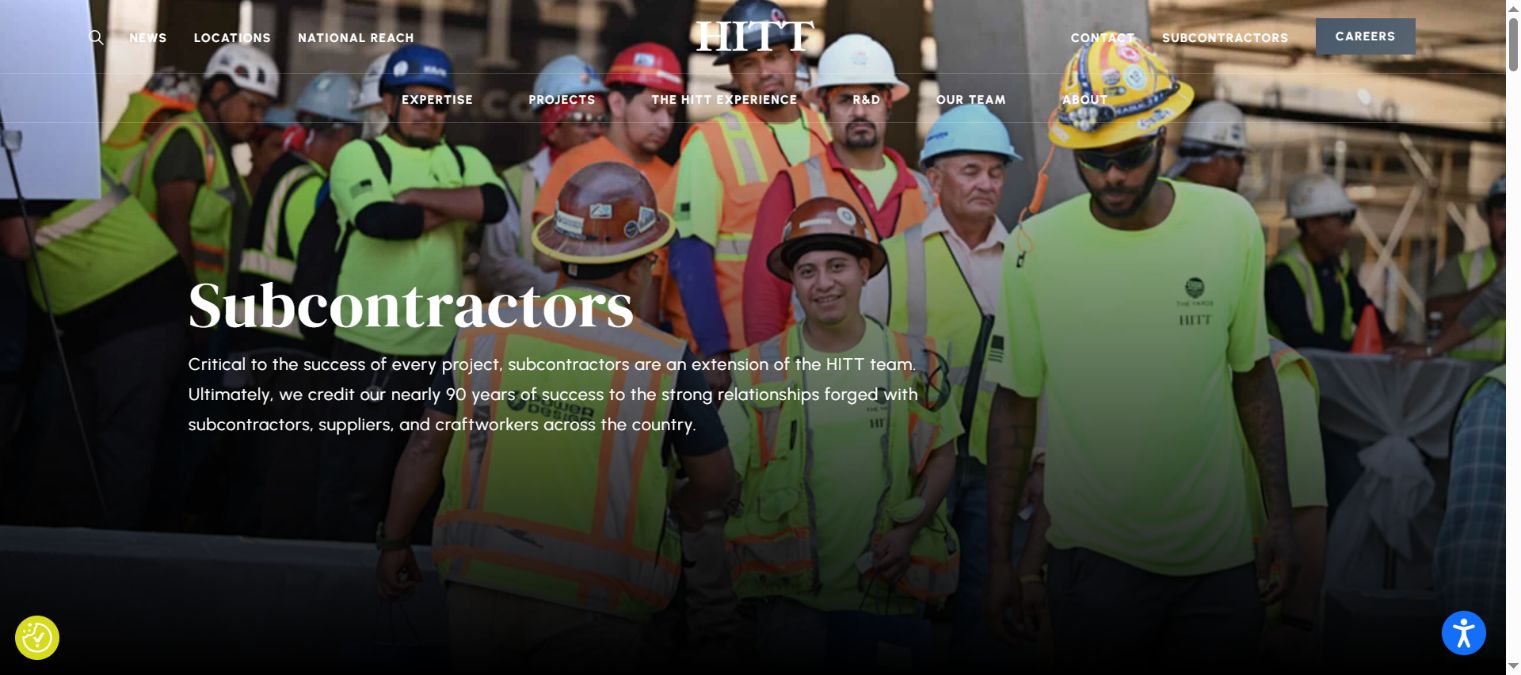
HITT gives subcontractors a distinct page with onboarding information.
- What's good: trade partners have a clear place to start.
- What to copy: find the firm's own instructions before sending a general sales message.
- What I'd change in your process: assign one employee to keep the company details current and note the next review date.
Alston: separate the plan room and prequalification
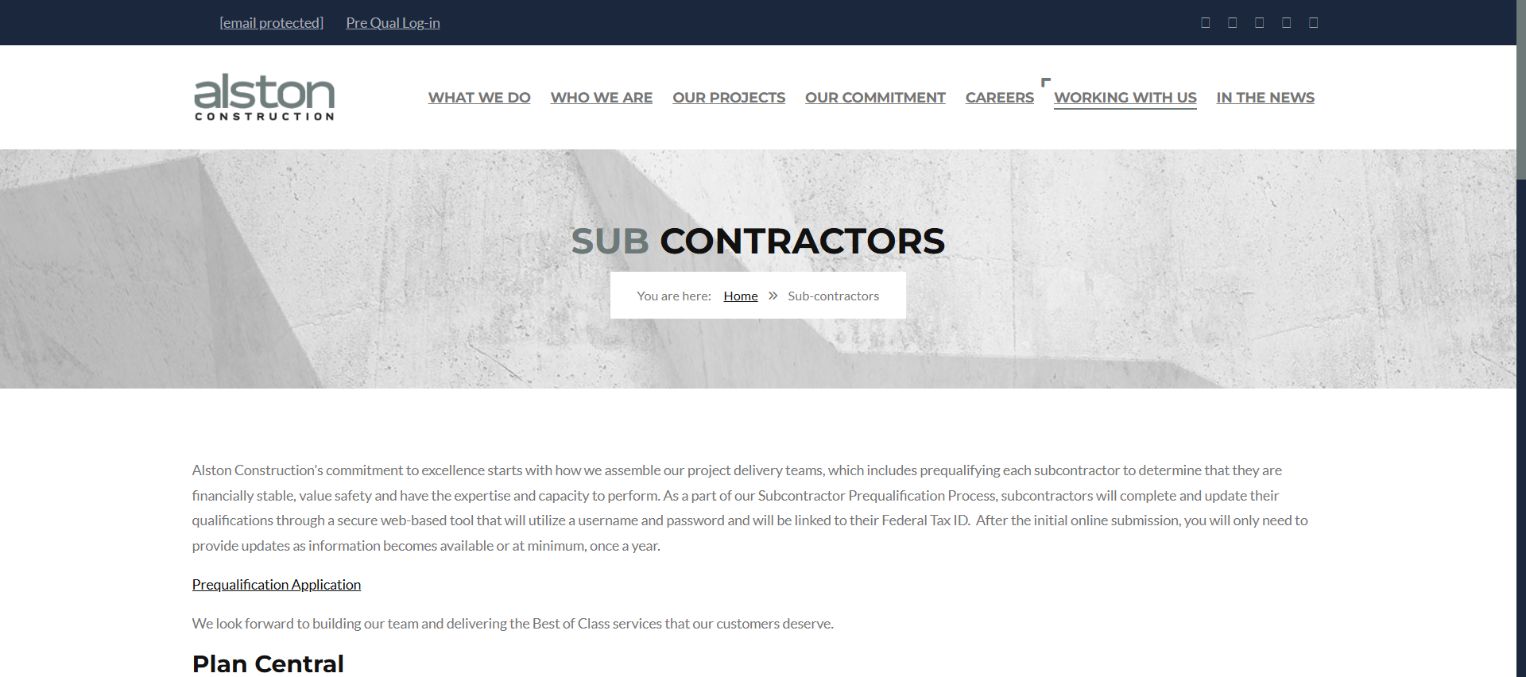
Alston provides separate paths for Plan Central and prequalification, with information about the firm's review.
- What's good: project access and company qualification are recognizable tasks.
- What to copy: read what each path is for before assuming a registration grants access to a particular job.
- What I'd change in your team checklist: record who owns the login and who answers company information requests.
Balfour Beatty: explain the partner process
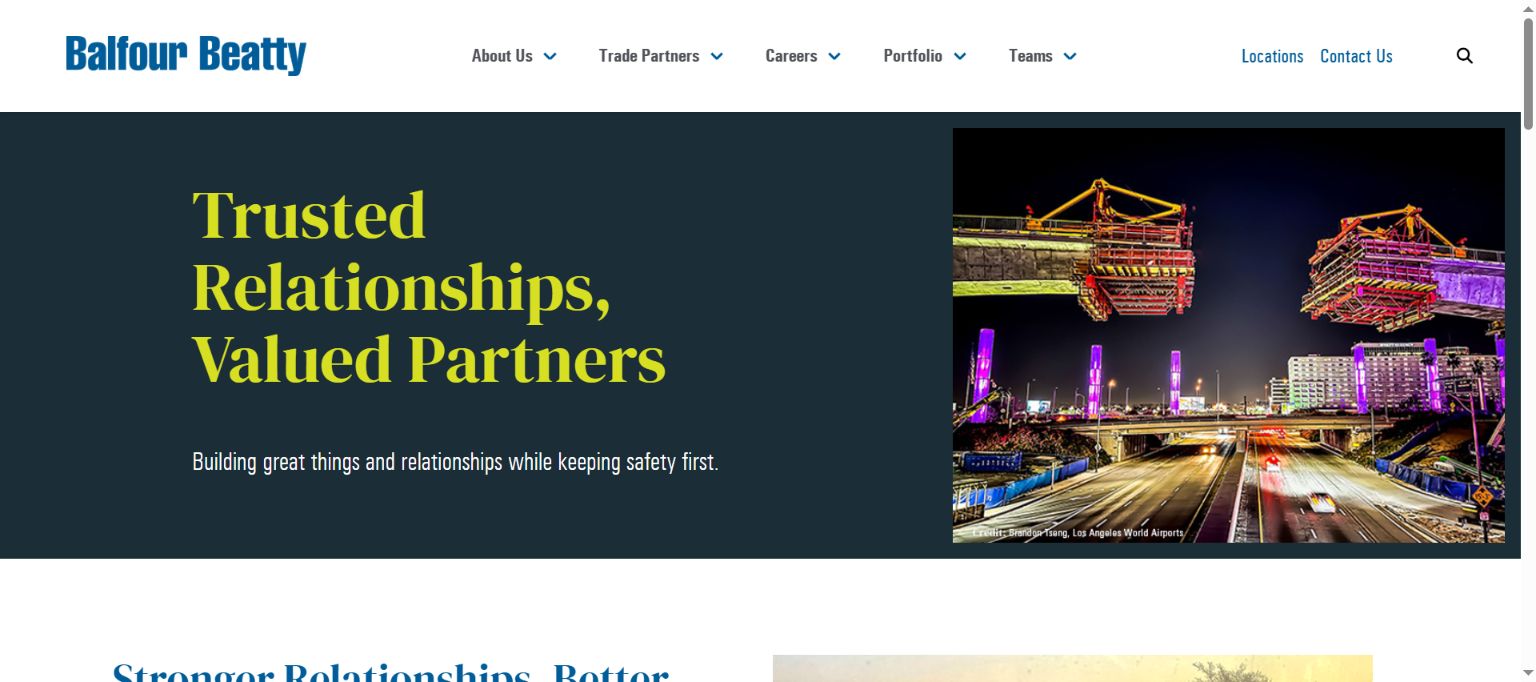
BalfourBeatty explains its trade-partner process, including the prequalification platform it uses.
- What's good: partners can see the process before starting.
- What to copy: prepare the company information the current process asks for.
- What I'd change in your follow-up: separate “registration complete” from “invited to a project” in the company log.
Requirements vary by firm and project. Read the current instructions and keep the information accurate. Registration puts your company into a process; it isn't an invitation or an award.
Pursue, keep in touch or pass
Use three plain decisions after screening. “Pursue” means the opportunity clears the hard gates and someone owns the next action. “Keep in touch” means there's a reason to stay involved, with a milestone that makes the next contact relevant. “Pass” means the company has a reason to stop.
| Decision | Example reason | Next action |
|---|---|---|
| Pursue | Role, work and delivery capacity fit. | Assign the project lead and next required step. |
| Keep in touch | The owner is still choosing a site. | Record the site decision as the next review trigger. |
| Pass | A required qualification or capacity is missing. | Record the reason and release estimating time. |
For a company pursuing education work, an early project record might be worth researching even before a bid path is open. That doesn't make it ready for an estimate. BD can understand the organization and process while the estimating team stays on current opportunities.
Keep the decision short enough that another employee can understand it. A reason like “no delivery team for the required window” is more helpful than a score with no explanation. You'll see patterns when the team reviews why it passed.
Send a short, relevant introduction
Lead with the reason the recipient should know your company. Name the service and sector you can support, then ask about the right next process. Avoid turning the first message into a long company biography.
Here's an original starting point for a commercial email. The project example you attach needs to be your own work and relevant to the recipient.
First introduction to a GC trade-partner contact
Subject: {Trade} support for your {region} projects

Hi {name},

I'm {name} with {company}. We perform {specific trade and scope} in {region}. Our attached project overview explains our role on {relevant project}.

Could you point me to your current trade-partner registration process? I'd like to understand the requirements before our team puts information together.

Thanks,
{name and role}
{company}
{postal address}

This is a business introduction. If you'd prefer no further emails, reply and we'll remove you from our outreach list.
Commercial email needs truthful identity and subject lines, a clear commercial purpose, a postal address and a working opt-out. Keep those basics in the message process instead of attaching a legal lecture to every introduction.
Once a person replies, follow the process they give you. You can send the relevant project overview when it helps. Repeatedly asking for work without taking the requested step makes the relationship harder for both sides.
Log the next project decision
Keep one short record per opportunity. Include the source, organization, scope, stage, fitting reason, next milestone, owner and next action. Add the effort spent when your team starts pricing or preparing a response.
Your company owns source research, qualification, bids, proposals and procurement. 9xLocal markets the company through the website, search, ads and follow-up; we don't provide a bid list or submit prequalification for you.
If a website inquiry becomes a pursuit, note what the buyer asked and which page supported the discussion. If an existing relationship leads to a project after a website visit, keep that history. You'll make better spending choices when the log describes what happened instead of assigning the entire project to the last click.
Use the construction Google Ads guide for paid search costs and the stages after an inquiry. If organic discovery is the gap, the construction SEO guide explains the page work. Each channel should support a buyer path your team can run.
Frequently asked questions
Are free construction leads worth checking?
Yes, when the project fits your company and the information is current. Include your research and estimating time even if access costs nothing.
Is a project record the same as a bid invitation?
No. A record gives information. An invitation asks your company to respond under a specific scope and process.
Should we buy exclusive leads?
Read what exclusive means in the offer before buying. Ask which information is supplied, how it's checked and what happens when an inquiry is outside the agreed work.
Can we judge a source by one award?
Review the full group of opportunities and effort. One award can hide a large amount of research and pricing on work that never fit.
Need help with company marketing?
Make the company easier to find and check, then give project inquiries a clear first response. Our construction lead generation services handle the website, search, ads and follow-up work you choose. Packages start from $297/month, with no setup or build fee. See the service to discuss the company marketing job that comes first.