An owner looking for a contractor can become an inquiry. A formal procurement process follows its own requirements. Search works best when you can describe the buyer's need, show relevant work and ask for a sensible first conversation.
Our construction marketing agency can run the campaign work you choose. This guide explains the setup, costs and project decisions your team should understand first.
Start with one service people search for
Pick a service that fits the team and backlog. Commercial tenant improvements, laboratory fit-outs and cold-storage construction are different searches. They should lead to different explanations of the work.
Write down the buyer you want, the service area and the work you're willing to price. Then inspect the search results for that need. Are you seeing project services, careers, training or consumer repairs? That tells you what your campaign will have to sort through.
I'd begin with one service and a small set of closely related search terms. It's easier to judge whether “commercial laboratory fit-out contractor” attracts the right questions than to learn much from a broad campaign mixing homes, jobs and materials.
SEO may be a better first purchase when the site has little evidence and demand is thin. The construction SEO guide covers that page work. For the wider channel decision, use the construction marketing plan.
What clicks and inquiries can cost
LocaliQ's 2025 home-services Search study reports a general construction and contractors median of about $5 a click, $166 an inquiry and a 2.6% conversion rate. The study covers 3,211 US campaigns on Google and Microsoft, run from April 2024 to March 2025. Its reported averages are medians.
That's a starting reference from home services, not a commercial-GC budget forecast. Your sector, area and buyer search can be very different. Keep the source context beside the figures, then replace them with your own campaign evidence as the test develops.
| Cost to keep separate | What it answers |
|---|---|
| Click cost | What did we pay to bring someone to the page? |
| Inquiry cost | What did it cost to get a project question? |
| Fitting inquiry cost | What did it cost after our team checked the work and buyer? |
| Bid cost | What effort have we put into the projects we've priced? |
| Award and paid-project cost | What happened after the pursuit and delivery steps? |
A low click cost doesn't tell you whether the company can win or deliver the work. I'd judge the first test on search relevance, the page and the inquiries reaching BD. You'll find a worked full-cost example and calculator below.
5 steps to build the first campaign
1. Choose the service and first conversation. Decide what you want the buyer to ask about. For a laboratory fit-out campaign, that might be a discussion of the building, use and project stage.
2. Group closely related searches. Keep the wording close enough that one ad and page answer the need. Review job, training and supply searches as possible exclusions. Use judgment: “construction jobs” may mean employment, while a different phrase may describe project work.
3. Match the page. Put the service, area and relevant evidence near the top. The ad's promise should still be visible after the click. Avoid sending a specialist search to an unrelated company overview.
4. Set the geography deliberately. Google's default location options can include people showing interest in a place. Review the setting for your campaign. Some owners manage properties from another state, so a strict physical-presence choice can miss a buyer you want.
5. Set a budget and test the response. Choose a spend your company can carry while it learns. Test the inquiry path, identify who receives it and make sure that person can reply. The first campaign version is usually live within 3 working days after access and basic details when that work is the scope you choose.
2 real sponsored results to learn from
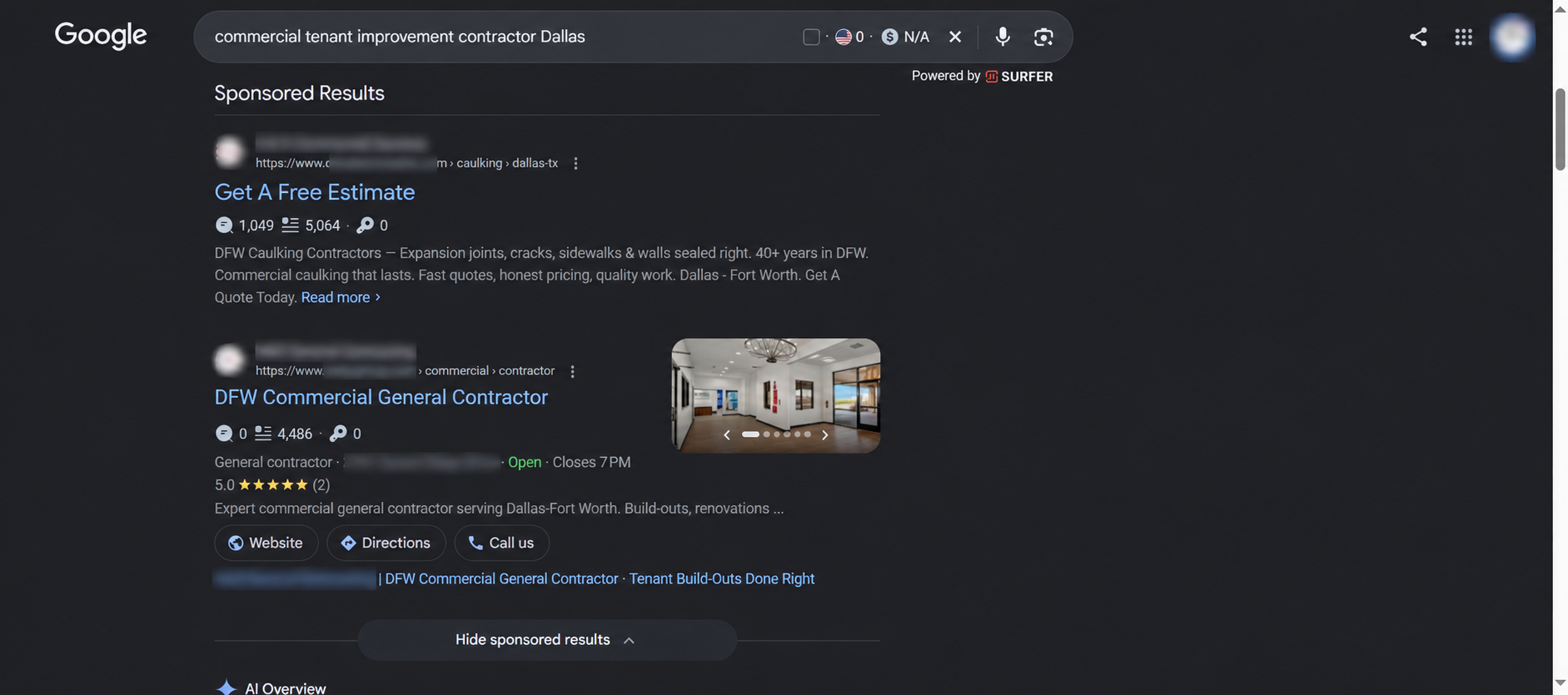
These were observed for a Dallas commercial contractor search. The capture keeps the full visible ad units, including the photo where present, headlines, descriptions and buttons. Advertiser identities are blurred. Google shortens part of the description on screen; the screenshot preserves that limit.
A specific trade with a clear offer
The first result leads with “Get A Free Estimate” and describes “DFW Caulking Contractors.” It's a text result in this capture, without a separate project image. The visible action is the headline or “Read more” link.
- What's good: the service and area are clear, so a buyer can recognize the job being offered.
- What to copy: name the work before adding broad company language.
- What I'd change: for a complex commercial scope, make the landing page explain what information starts the estimate discussion.
A GC with a project image and contact choices
The second result says “DFW Commercial General Contractor.” It shows an interior project image, a short service description and Website, Directions and Call us buttons.
- What's good: the buyer can see the company role and a piece of the work together.
- What to copy: let the image support a clear service heading and a contact action.
- What I'd change: send the website visitor into the most relevant service page, rather than relying on the general company presentation.
The ads were visible when captured on 31 October 2026. Their run dates, performance and precise campaign subtype weren't exposed in these views. The small extra numeric annotations visible under the headlines come from a browser extension, not an advertiser performance report.
3 ads you can adapt
These are original copy examples, separate from the observed ads above. Use only the services and areas your company can support. The headline and description need to match the page the buyer opens. Check the final text lengths after filling the placeholders.
Original example: laboratory fit-out
Headline: Laboratory Fit-Out Contractor
Headline: Discuss Your Planned Facility
Headline: Send Your Project Outline
Description: See our laboratory fit-out work in {region}. Share your project stage with our team.
Description: Review project roles and scope before a conversation about your planned facility.
Original example: cold-storage construction
Headline: Cold-Storage Construction
Headline: Project Experience in {Region}
Headline: Talk About Your Planned Site
Description: Review our cold-storage project role. Send the site and project stage to our team.
Description: See our scope on relevant projects in {region}. Start with your next milestone.
Original example: commercial interiors
Headline: Commercial Interior Builds
Headline: Share Your Fit-Out Outline
Headline: Project Experience in {Area}
Description: See our commercial interior work in {region}. Send your fit-out outline to our team.
Description: Review our role and scope on relevant projects, then contact business development.
I'd keep the claims this plain until the company has evidence for more. “Best GC” adds less than a clear service and a relevant project. If the service changes, change the ad group and landing page together.
Send the click to a commercial page
The first screen should tell a buyer they've reached the right place. Name the service and area, show relevant work and explain the next contact. A project photo needs a caption that tells the visitor what your company did.
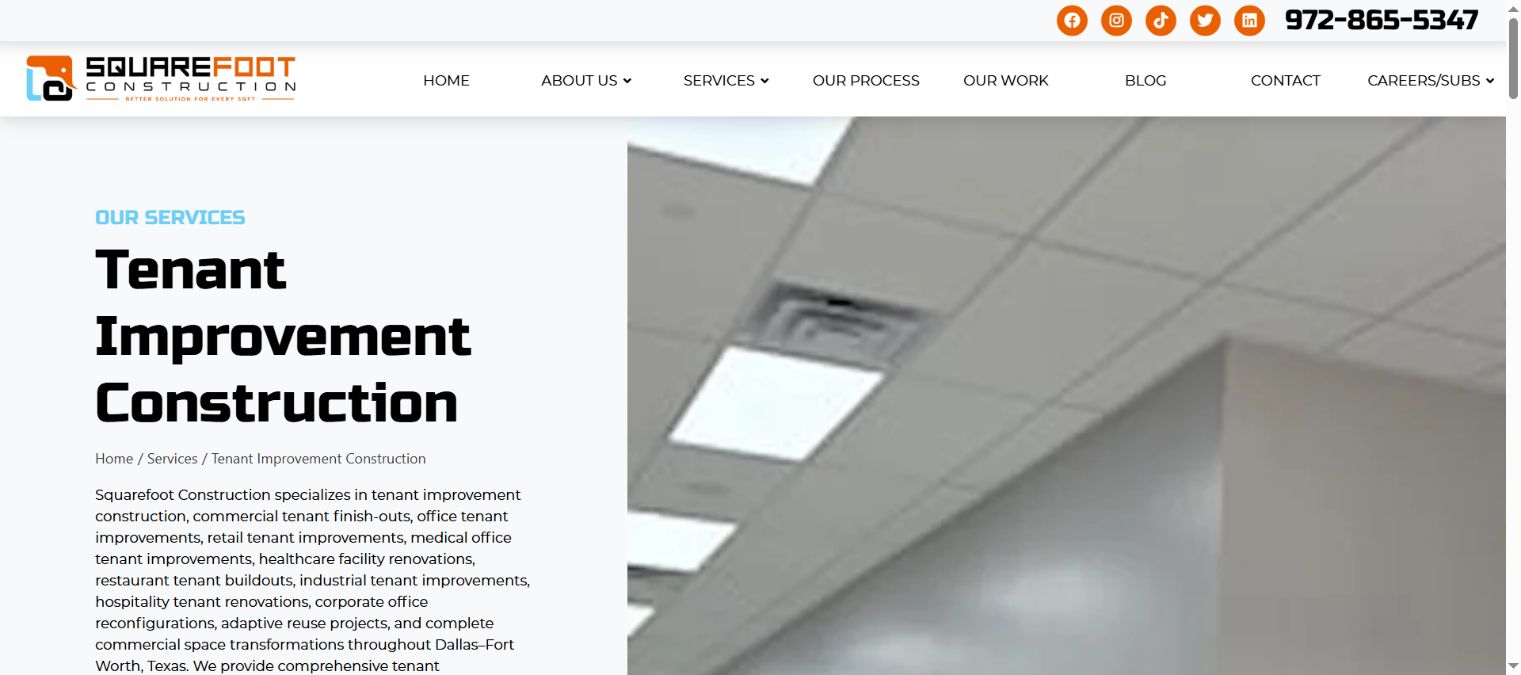
Squarefoot gives tenant improvement construction its own page. The heading names the service, and the page describes commercial uses and related project work. This service page is a separate website example.
- What's good: a commercial tenant-improvement visitor can identify the service immediately.
- What to copy: keep the service name, commercial audience and supporting work together.
- What I'd change for an ad landing page: shorten the long opening and bring the closest project evidence and first inquiry action higher.
Keep unrelated career and supplier paths available without letting them take over the buyer's next step. Ask for enough context to start a conversation: organization, project type, location and next milestone.
Give the office the same page and ad the visitor sees. That lets the first reply pick up the right conversation. If the campaign promises a project discussion, the response should help arrange that discussion. When the inquiry is for work outside the company's scope, record the reason and use it in the campaign review. That feedback is more actionable than calling every form submission a good lead.
Get the first reply right
Reply in terms of the request. A developer sending a concept needs a different answer from someone asking for a subcontractor registration link. The AI assistant can book a conversation or send the details to the office; the company handles the project judgment, bids, proposals and procurement.
Original reply to a project inquiry
Thanks for getting in touch about {project type} in {location}. What stage is the project at, and what's the next decision date?

I can help arrange a conversation with the office or pass along the outline you've shared. The project team will discuss the scope and next steps with you.
If a phone call is the main action, make sure someone can answer or follow up. A campaign can be relevant and still waste money when the first inquiry sits in the wrong inbox.
Check the full cost of a pursuit
Example: $2,500 in media, an assumed $750 campaign fee and $500 in office effort costs $3,750. Five inquiries cost $750 each. If two fit your work, that's $1,875 per fitting inquiry. If your team submits one bid, the effort cost is $3,750 at that stage. With no awards yet, award and paid-project costs stay pending.
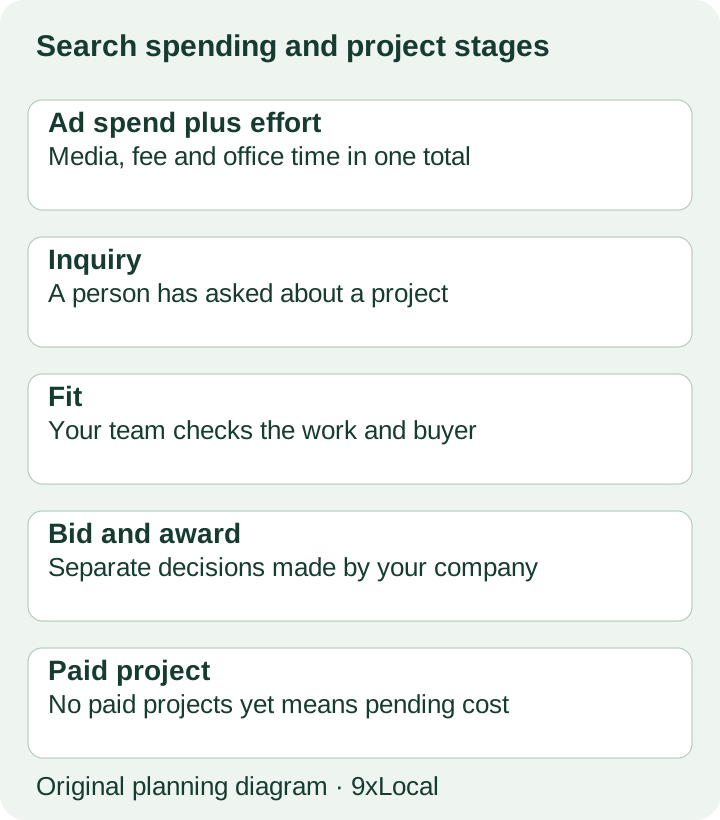
Use counts from the same group of inquiries and the same review period. Keep later stages no larger than the stages before them. This keeps an old award from making a new campaign look better before its own projects have moved forward.
Search ads or Local Services Ads?
I'd start with Search for a defined commercial service. It lets you choose the searches and page around the work you're pursuing. Local Services Ads depend on the service category and area available to the company; check current eligibility before including them in the plan.
| Option | What I'd check first |
|---|---|
| Search ads | Is there demand for the service, and can one page answer it well? |
| Local Services Ads | Is the company and service eligible in the area, and does the inquiry type fit? |
| SEO and relationships | Is the buyer mainly checking known firms or following a formal invitation process? |
For a commercial GC, an available advertising category alone doesn't make it the best channel. Choose the buyer path first. Consumer home-service leads may be a poor match for the sector you're trying to grow. For buyers who aren't searching yet, the construction Facebook ads guide explains where project promotion and repeat visibility fit.
Fix the weak link before more spend
Keep one short review covering the whole test. Look at the search terms, page, reply and fit together. If the queries are wrong, tighten them. If buyers reach the right page but leave confused, improve the offer and evidence. If good inquiries wait too long, fix the office response.
Then decide whether more spend is earned. A campaign bringing fewer but better project conversations may deserve another test. A larger inquiry count from work you don't perform needs a change, not a bigger budget.
Frequently asked questions
Can Search work with low commercial search volume?
Yes, a narrow service can still earn a small test. Keep the scope focused and judge the inquiries individually rather than expecting consumer lead volumes.
Should we exclude everyone outside our region?
Review who buys your work first. An out-of-state owner may be planning a local project, so location settings need to match the buyer rather than just their office address.
Are these benchmarks a target for our company?
No. They're a dated home-services reference. Use your own commercial search terms, costs and inquiry quality to decide what to change.
Want the campaign managed?
Bring a clear service, a relevant project and the person answering inquiries. Our construction marketing agency can run the campaign work you choose. Packages start from $297/month, with no setup fee; ad spend is separate and paid directly to the platform without markup. See the service to discuss the first test.
Sources
- LocaliQ, 2025 Home Services Search Advertising Benchmarks. Verified 31 October 2026.