
The best remodeling leads come from people who want the work you sell, in the towns you cover, at a cost the job can support. I'd start with referrals, a clear Google profile and photos of similar jobs. Then test one paid source against the appointment space you have. Choose the job first: additions, kitchens, bathrooms, basements and whole-home remodels need different messages.
Our lead generation service for remodelers is the matching service page for this topic. The comparison below will help you decide what to handle yourself and what to ask someone else to run. For the wider service, see our remodeling marketing agency.
Which source should you start with?
Use Search ads when you want people already looking for a contractor. Use Facebook and Instagram when you've got strong project photos and an offer worth stopping for. Build referrals and local search alongside either one. Bought inquiries can be worth testing when the request, coverage and terms fit your business.
| Source | What brings the homeowner in | Best starting use | Work your team still does |
|---|---|---|---|
| Referrals and local relationships | Someone recommends you. | Similar projects near jobs you've built. | Explain your scope, availability and next step. |
| Google profile and SEO | A local search or a check on your company. | Steady visibility for your main services and towns. | Keep the information, reviews and project pages current. |
| Search ads | A search for the service. | A focused test for one job type. | Match the ad and page, answer calls and qualify the job. |
| Facebook and Instagram | A project image, video or offer. | Start conversations around a visible change. | Ask about the job and follow up with people still planning. |
| Bought inquiries | A request collected elsewhere. | Fill a defined gap with clear buying terms. | Reach the person, check the request and compete for the job. |
For a general contractor with two appointment openings next week, a short list of good referral conversations may be enough. For a company opening a new addition schedule, one focused campaign may make more sense. More names are valuable only when the office and estimator can deal with them.
If you're comparing two quotes now, jump to the cost-per-job calculator below. Include office time as well as the advertised lead price.
What remodeling leads cost
Use published ad costs as a comparison, then price the test you can afford. LocaliQ's home-services Search study reports a median cost per lead of $165.67, about $166 per lead, for Construction & Contractors (General). It covers 3,211 US Google and Microsoft campaigns from April 2024 to March 2025.
WordStream's 2026 Facebook study reports $42.95, about $43 per lead for Home & Home Improvement leads campaigns. That study covers 452 US leads campaigns from April 2025 to June 2026.
Those aren't quotes for remodeling leads in your town, and the two studies use different samples. Search catches people looking for a service; a social ad can reach someone much earlier. A guide download, a consultation request and a signed addition have different value to your company.
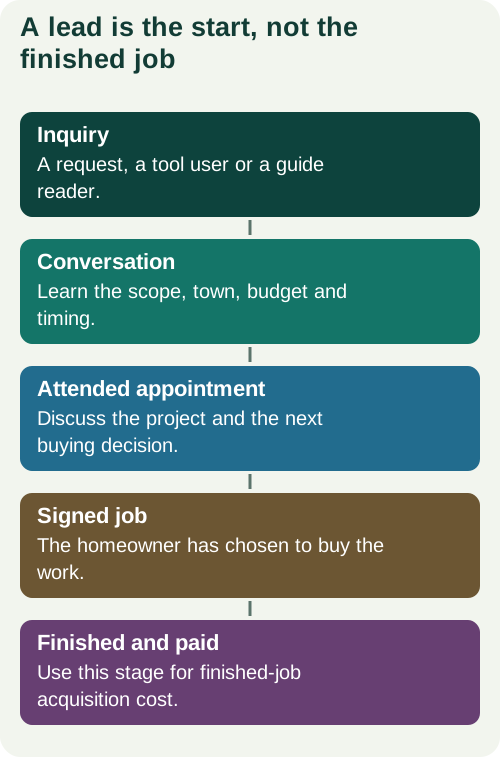
Ask what the word “lead” means in any offer. A homeowner's fresh request is different from a contact list. A booked visit is different from a phone number. Commercial bid invitations are another category again; this guide is about residential remodeling inquiries. For commercial company marketing, see our construction marketing agency.
Use Google Ads for remodelers for Search setup and job-cost math. The Facebook ads guide covers campaign setup and the offer behind the form. Here, the decision is which kind of inquiry your business can turn into a job.
How an addition offer shapes the lead
This remodeling ad shows how an offer shapes the inquiry. It was captured in the US Meta Ad Library on October 30, 2026. Advertiser branding is excluded from the creatives shown here. The time since an ad's start date is a clue for research, not proof of uninterrupted spending or profitable jobs.
An addition estimate starts a job conversation
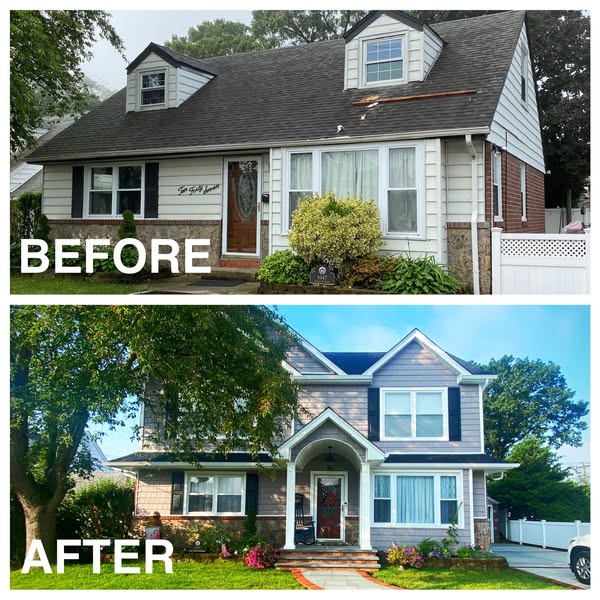
Ad excerpt
Main text excerpt: “Transform Your Home with a Second Story Dormer, Extension or Mother-Daughter Home Addition!” Headline: “Full Dormers & Home Additions.” Button: Get Quote. Started March 25, 2025, 584 days before capture.
- What's good: the before-and-after image makes the change easy to understand.
- What to copy: connect one big job type with a direct estimate request and your own project proof.
- What I'd change: ask the town and type of addition early so the office can sort the requests.
I'd expect the first conversation to cover the house, the extra space needed and whether drawings exist. The estimate offer opens that conversation; your office still needs to explain the estimating process.
The lesson is to match the response to the offer. An estimate request, a cost-tool user and a guide reader should hear different opening questions. A cheaper download can become an expensive lead if the office repeatedly pushes for a visit the person never wanted.
For more real ad examples, see our Facebook ads for remodelers guide.
Compare cost per job, including office time
Add acquisition costs and handling costs, then divide by finished, paid jobs from that group of inquiries. Use signed work as an earlier sales measure while projects are still underway.
Open the lead-source comparison calculator
Here's a teaching example, with made-up costs and outcomes:
| Cost or outcome | Source A | Source B |
|---|---|---|
| Buying inquiries or running the campaign | $1,500 | $2,000 |
| Office and sales time | $1,000 | $500 |
| Total | $2,500 | $2,500 |
| Finished, paid jobs | 1 | 2 |
| Cost per finished job | $2,500 | $1,250 |
Source B costs more upfront but wins this comparison. Reverse the finished-job counts and Source A wins. Neither bought inquiries nor your own campaigns get a free pass; the jobs and costs decide.
Check that the inquiries have had time to become finished projects. Keep an addition still in planning visible as open work. Compare similar job types and review dates so one source doesn't get judged before its jobs could finish.
Your spending ceiling comes from margin and cash. Suppose a $60,000 job has a 30% gross margin, leaving $18,000 before overhead and profit. If you choose to allow 15% of that gross profit for acquisition, the ceiling is $2,700 per finished job. Those are planning assumptions, not an industry spending rule. Replace them with your own numbers before buying a test.
Ask these 6 questions before buying leads
Get six clear answers from whoever collects the requests. You'll know what you're paying for and how your office should respond.
- What did the homeowner ask for? Ask to see the form or request wording. Separate a fresh inquiry from a list of names.
- Is it shared or exclusive? Ask what exclusive covers, how many contractors can receive the request and for how long.
- Which jobs and towns are included? List your minimum scope and excluded work.
- What qualifies for a credit? Understand wrong numbers, duplicate requests, out-of-area jobs and the deadline for reporting them.
- What's the full commitment? Include the term, recurring charges and cancellation process.
- What records will we receive? Your office needs the request time, contact details, scope and source.
A low advertised price means little if the request is old, outside your area or for work you don't sell. Keep one small test within a budget you can afford to lose, and save the terms with the order. A list of homeowner contacts also isn't permission to send them repeated marketing messages.
Make it easy for the right owner to call
Show the work, the town and the next step. An addition page should explain your role in drawings, the build and the connection to the existing house. A kitchen or bathroom page should say whether you handle design and installation. A basement page can answer the questions about layout, bathrooms and the first visit.
Use project-and-town pages where you've got work and detail to show. A page that changes only the town name gives the homeowner little help. Let the photos and explanation demonstrate why you're a match for the job.
Google says local results mainly depend on relevance, distance and prominence. Accurate business information, reviews and photos help people judge the company. Keep the profile aligned with the business you run; extra town names won't move the office closer to a searcher.
Our SEO service for remodelers covers the local visibility work. The remodeling website design page shows the pages and project proof that help turn that attention into a call.
Ask 5 questions before a site visit
Ask about the job, address, budget, timing and people making the decision. You can cover those points without making a homeowner feel interrogated.
“Tell me what you'd like to change and where the house is. Have you got drawings or a budget in mind yet? I'll explain how we handle the first visit and what we'd need before pricing the work.”
Listen for the next step they need. An addition owner with drawings may be ready to compare builders. Someone exploring a whole-home remodel may first need help defining the scope. A bathroom inquiry asking only for a small repair may belong with another type of contractor.
For the fuller script, use the remodeling sales process. When a homeowner is planning ahead, choose a return date and use the relevant email follow-up message. The office can stay in touch without trying to book every early idea into next week's calendar.
Run a small test you can answer
Choose one job type, one area and one source for the first comparison. Set the maximum spend and the appointment slots before the test begins. An overloaded estimator won't give a new source enough attention.
Keep one short list: inquiry, source, job, town, next action, appointment, signed job and finished payment. Add office time in a sensible block rather than logging every minute. The owner needs enough detail to make the next buying decision, not a second full-time job maintaining a spreadsheet.
At the review, ask where the work stopped. Plenty of inquiries but few conversations points to contact details, response or offer expectations. Good conversations but poor job fit points to the service and area being advertised. Good visits but no signed work calls for a look at scope, pricing and the proposal conversation.
Keep the test running or stop it because of those answers and the spending limit. Before spending more, ask whether you want more leads like the ones you just received.
Frequently asked questions
Are exclusive remodeling leads better?
Exclusive requests can reduce direct competition for that inquiry, but check the definition and price. The homeowner may still be contacting other contractors elsewhere. Judge the source by the jobs you win and the total cost.
What's the best source for addition leads?
I'd start with referrals and searches for addition builders, backed by similar project pages. Test a visual social offer when you've got strong photos and time for earlier planning conversations. Your area, capacity and margins decide the budget.
Why are leads coming in but nobody books?
Read the request and listen to the first conversation. Check whether the offer promised a guide, a rough cost or a consultation. Then check response time, scope and whether the next step is clear. Change the part that's causing the mismatch.
Your next step
Choose one job type and compare two sources using total cost, office time and jobs won. If you'd like help connecting the work, see lead generation for remodeling contractors or our live remodeling marketing agency page. Packages start from $297/month, with no setup or build fee and ad spend separate, with no markup.
Sources
- LocaliQ: 2025 Home Services Search Advertising Benchmarks. Verified October 30, 2026.
- WordStream: 2026 Facebook Ads Benchmarks. Verified October 30, 2026.