
A remodeling sales process should do three things: find out whether the job fits, help the homeowner make the next decision and give someone the next call to make. I'd start with a short phone call before driving out to price an addition, kitchen, bathroom, basement or whole-home remodel. You'll spend more time on jobs you can build and less on estimates that were never going anywhere.
Our remodeling marketing agency can connect your selected website, ads and lead follow-up. The sales conversation below is the part your team needs to get right when the phone rings.
Start with a phone call
Ask six questions, then tell the homeowner what happens next. You're having a conversation, not making them pass an exam.
- What would you like to change? Find the problem behind the room. A bigger kitchen might mean moving a wall, changing the layout or building an addition. Those are different jobs.
- Where's the house? Get the town and address so you can check your service area and travel time.
- What work are you expecting us to handle? Ask about design, drawings, materials and other trades. A general contractor needs to know whether this is a full remodel or installation only.
- Have you set a budget? Offer context from comparable jobs you've priced. Say what that range included and what you'd need to see before narrowing it.
- When would you like to start? Separate a fixed deadline from a preference. Explain your next opening honestly.
- Who else will help decide? Invite the people who need to discuss layout, price and the work in the house.
Here's how that can sound:
“Tell me what's bothering you about the space. Are you hoping to change the existing kitchen, or do you need more room? Once I know the job and the town, I can explain how we price it and whether a visit makes sense.”
If they ask for a number first, answer the question. “Our recent jobs with that scope have been in this range” is more helpful than dodging it until you've booked a visit. Use your own job history. A bathroom with the same footprint needs a different discussion from an addition with foundation work.
You can decline kindly, too: “We handle full bathroom remodels, so a shower-door replacement is smaller than the jobs we're taking. You'll want an installer who handles that work.” It's a clear answer, and both of you can move on.
7 stages from inquiry to paid job
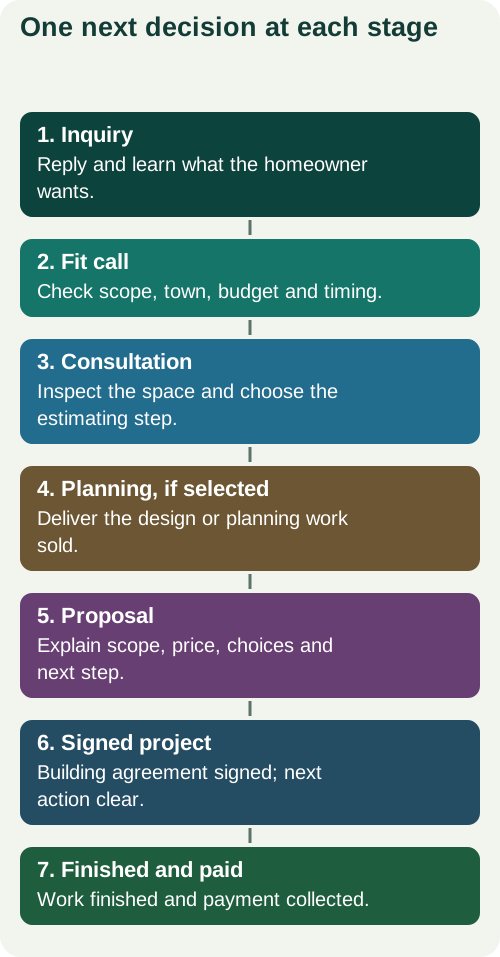
Keep seven stages, with a clear reason for moving a job forward. The homeowner should understand the next step without knowing anything about your sales software.
| Stage | What needs to happen next |
|---|---|
| Inquiry | Someone replies and learns what the homeowner wants. |
| Fit call | Scope, area, budget and timing make a visit worth booking. |
| Consultation | You inspect or discuss the project and choose the estimating or planning step. |
| Planning, if needed | The homeowner buys a defined design or planning service. |
| Proposal | You explain the scope, price, choices and next decision. |
| Signed project | The building agreement is signed and the required next payment or action is clear. |
| Finished, paid job | Work is finished and the agreed payment has been collected. |
Small jobs can move through some of these steps in one conversation. An addition may need several meetings. Paid planning belongs in the process only when you sell it; it isn't a required stage for every remodeler.
For a teaching example, imagine 40 inquiries, 20 phone calls, 10 attended visits, four planning jobs and two signed builds. One build is finished and paid at the review date. You've sold two builds, but collected the final payment on one. That distinction helps you plan both the crew and the cash.
Choose what your estimate includes
Give the homeowner a clear choice between a first conversation, an estimate and paid planning. Charging for detailed work can make sense, but the fee needs a deliverable behind it. Pro Remodeler's reporting shows several estimating approaches, including early budget discussions followed by more detailed design and pricing. There's no single estimating method for every company.
| Step | What the homeowner gets | What you explain before starting |
|---|---|---|
| Free fit call | A discussion of the job, your process and whether the job fits. | What you can answer now and what needs a visit or drawings. |
| Site estimate | The inspection and pricing work included in your estimate service. | Whether it's free or paid, the scope and when they'll hear back. |
| Paid planning | Named work such as measured drawings, layout choices or a detailed scope. | Fee, deliverables, revisions, ownership and whether any fee is credited later. |
A kitchen owner might already have drawings and selections. You may be ready to price the build. An addition owner with a rough sketch may first need design, structural input and decisions about the existing house. Explain that difference before asking them to buy the next service.
Say:
“The first call is free. If we move into planning, here's what that includes, what it costs and what you'll have at the end.”
Then show the planning scope. A vague “design fee” makes a homeowner wonder what they're paying for.
Price that service from the work it takes your team to do. Include visits, measuring, drawings, trade input and the revisions you're offering. You'll know whether you can deliver it profitably. A fee copied from another contractor tells you very little about your own costs.
Run a proposal meeting
Walk through the proposal with the homeowner. Sending a large file and waiting for a signature leaves too many questions unanswered.
Use this agenda:
- Restate the change they want and the parts of the house involved.
- Show the scope, including what's excluded.
- Explain the price and any allowances or choices still open.
- Compare the options that matter to their budget.
- Explain the likely sequence and the decisions needed before scheduling.
- Set the next action and a date to talk again.
For an addition, the base scope might keep the existing kitchen. An option might also open the kitchen into the new space. Show the extra work and price separately. The homeowner can then decide whether the connection is worth the added spend.
For a basement, compare the finished living area with an option that adds a bathroom. For a whole-home remodel, talk through whether the family can stay in the house. You'll often uncover a bigger buying question than cabinet color.
NARI's homeowner guidance encourages questions about supervision, workers, insurance, references and the contract. Have those answers ready. Use contract and payment terms that meet the rules where you work, including any required notices. Put those requirements into the agreement and the steps your office follows.
If the price is higher than expected, ask which part needs work: “Is the total beyond what you want to spend, or are you unsure what's included?” Those answers lead to different next steps. One needs a smaller scope; the other needs a clearer explanation.
Follow up on the open question
Make the next message about the decision holding up the job. “Just checking in” gives the homeowner nothing to answer.
| What's holding it up? | What to send or discuss |
|---|---|
| The layout | Two choices and the trade-off between them. |
| The budget | The scope change you discussed and what it removes. |
| The start date | Your current opening and what needs to be ready first. |
| Another proposal | A calm explanation of your scope, allowances and exclusions. |
| A household decision | A time when everyone can ask questions together. |
Here's a short follow-up after a kitchen proposal:
“Hi {first name}, you were deciding whether to keep the wall or open the kitchen into the dining room. Would it help to walk through those two scopes together? I can talk {time one} or {time two}. Which works for you?”You'll find more messages in contractor email follow-up. Choose the one that matches the conversation, then change it to fit the job.
A homeowner planning for next year can stay in touch on the date they've chosen. Someone who hired another builder can leave the sales list. That keeps your office focused on open conversations instead of chasing every old name forever.
Plan around your appointment slots
Start with the visits your estimator can handle. Two site visits a week over four weeks gives you eight appointments. If one in four visits turns into a signed build, that's two signed projects. The 25% close rate is a teaching assumption; put your own rate into the calculator.
Open the appointment capacity calculator
The tool also counts preparation, travel, visits and proposal time. It shows the monthly sales hours behind your appointments, plus the time spent per signed job at your chosen close rate. It estimates signed jobs, not construction starts or cash collected.
If your calendar is full, stronger phone calls may help more than another campaign. If you have room for visits but few inquiries, start by checking whether people can find you. Your Google Ads for remodeling jobs plan should fit the appointments you can take.
Keep margin in the conversation as well. NAHB reported an average gross margin of 29.9% and net margin of 6.3% for residential remodelers in 2024. Those figures describe the study, not your business. They show why job revenue alone is a poor spending limit: labor, materials and overhead already have a claim on that money.
Fix the slowest step
Review the open jobs once a week and pick one problem to fix. You'll learn more from a handful of conversations than from arguing over a dashboard color.
If inquiries wait overnight, assign a reply owner and a backup. If too many visits are small repairs you don't sell, make your website and first questions clearer. If proposals stall, read the open questions and book a proposal discussion. If signed jobs are stacking up behind a full crew, set the start-date expectation before another visit.
Keep a short note for each open project: homeowner, job type, town, current stage, next action, person responsible and date. Record the reason when a job is lost. “Budget too low for addition scope” tells you more than “bad lead.”
Pro Remodeler's sales commentary emphasizes understanding the buyer and helping decisions move forward. Use that idea to improve the conversation, rather than forcing every homeowner through the same pitch.
Project photos can answer a question before the next meeting. Show the finished space, the starting problem and the work you handled. The point is to help someone picture a similar job, not to send your entire photo library. Your remodeling website should make those examples easy to find.
Frequently asked questions
Should remodelers give free estimates?
Start with a free fit call. Then explain whether the next step is a free estimate, a paid site visit or planning. Your choice should reflect the work involved and what the homeowner receives. Detailed design and trade pricing deserve a clearly scoped service.
What's a good remodeling sales close rate?
Use your own rate for comparable jobs and the same starting stage. Signed jobs divided by attended visits answers one question; signed jobs divided by all inquiries answers another. Keep additions separate from small bathroom jobs when the selling process differs.
Should everyone deciding attend the visit?
Invite them when their input affects scope or price. Ask who needs to be involved and find a time that works. You'll save repeat explanations without turning a normal scheduling issue into a confrontation.
What if the homeowner only wants a price?
Give the clearest budget context you can support from similar work. Explain the assumptions, then ask about the scope. If the range is far beyond their budget, you can discuss a smaller job before either of you spends time on a visit.
Your next step
Pick five open inquiries and give each one a next action, owner and date. Then use the six first-call questions on your next new lead. You'll quickly spot the gap: inquiries, clear answers or follow-up.
If you want the marketing and booking connected, see how 9xLocal works with remodelers. Packages start from $297/month, with no setup or build fee. The AI assistant can book into your calendar or pass the details to your office. Your team still decides which jobs fit and how to sell them.
Sources
- NAHB: Remodelers Saw Profit Margin Gains in 2024. Verified October 30, 2026.