I'd build around your Google profile, referrals, job sites and ads in your own accounts. Judge every source by what it costs to win a suitable roof, then check that the job gets completed and paid.
Want help running that? See our roofing lead generation services and roofing marketing agency. For the wider sequence, use the roofing marketing guide.
The main types of roofing leads
Choose the product you actually need. A name and number, a homeowner asking for a repair, and a booked inspection are three different things.
| Type | Who else gets it | How you pay | Best use | Watch out for |
|---|---|---|---|---|
| Shared leads | Several roofers; ask for the maximum | Per lead | Topping up a team that can respond quickly | You're competing for the same conversation |
| Exclusive leads | The seller supplies only you under its stated terms | Per lead | Testing a source without seller-created competition | "Exclusive" may cover only one network or a short period |
| Appointments | Ask whether the visit is exclusive and booked with your company | Per appointment | Filling specific available inspection slots | A booked visit may become a no-show or the wrong job |
| Pay per call | Ask how calls are routed and resold | Per qualifying call | Repair inquiries when someone can answer | Billing duration, repeats and calls outside your area |
| Google Local Services Ads | The inquiry reaches your account; the homeowner can contact other providers | Per valid lead | Local people actively seeking roofing help | Eligibility, budget, competition and available local demand |
| Your own ads | You receive the inquiry from your campaign | Ad spend plus any management | Planned replacements or a focused repair offer | The offer, qualification and follow-up all affect sales |
| Referrals and partners | You're introduced directly; the buyer may get other quotes | Relationship-building time and any lawful referral costs | Work introduced by people who know you | An introduction needs a clear next step |
| Door knocking and job sites | Your rep speaks directly to the homeowner | Time, print and any sales commission | Neighborhoods where you're already working | Access, permissions and rep quality |
| Prospect lists | The same data may be available to others | List or subscription fee | Planned outreach with a separate contact process | A listed homeowner hasn't necessarily asked for a roofer |
If you're on a roof all day and nobody handles inquiries, fix that before buying shared leads. Paying more for an exclusive inquiry won't fix an unanswered phone either.
Check what the homeowner actually asked for
Ask to see the original ad and form. Then ask when the homeowner submitted it, which service they selected and who they expected to hear from. You want the conversation to match the promise that brought them in.
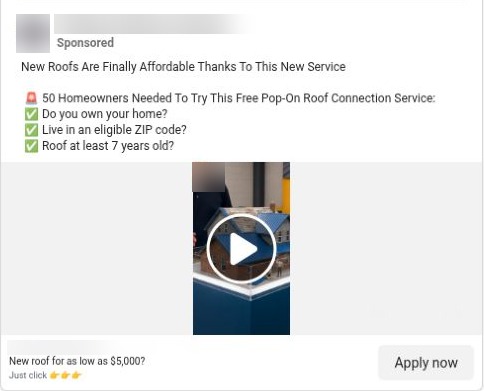
You don't need to copy the ad's claim. You need to know whether the person asked for an inspection, a price comparison or information about a program. Start the call with their request, then explain who you are.
Keep a short definition of a suitable inquiry: inside your area, a service you offer, someone able to arrange access, and a need your crew can handle. Log the reason when a lead misses that definition. "Bad lead" is too vague to fix or dispute.
What a lead really costs: cost per signed roof
Divide your acquisition cost per inquiry by the share you reach, the share of those people who book, and the share of booked inspections that sign. Use rates from the same source and intake period. If you've got monthly management fees, include their share in the acquisition cost too.
Example: compare these two sources using 33% as the booking-to-sale rate, roughly one in three.
| Input or result | Shared-lead test | Own Facebook ad test |
|---|---|---|
| Acquisition cost per inquiry | $60 | $150 |
| Inquiries you reach | 50% | 80% |
| Reached people who book an inspection | 25% | 50% |
| Booked inspections that sign | 33% | 33% |
| Expected cost per signed roof, rounded | $1,455 | $1,136 |
| Gross profit per roof before acquisition and overhead | $4,200 | $4,200 |
| Gross profit left after acquisition, rounded | $2,745 | $3,064 |
The $150 inquiry wins this comparison because more people get reached and book. Your records might show the opposite. That's why I'd compare the whole path before choosing a seller by its lead price.
For actual results, use total acquisition spending divided by signed roofs from that group of inquiries. Include sales commissions or inspection costs too if you're comparing the full cost of winning work. Keep the definition the same for every source.
Work backward to your maximum lead price
Choose how much gross profit you need to leave for overhead and earnings. Then turn your acquisition ceiling into a lead ceiling.
Example: you're willing to spend $1,200 to win a roof. At 50% reached, 25% booked and 33% signed, your maximum acquisition cost per inquiry is about $50. That's $1,200 x 50% x 25% x 33%. A $60 lead misses that target unless you improve the conversion rates or accept a higher cost per roof.
If you buy leads: 6 rules
- Put a person in charge of the first reply. Aim to call within minutes during your advertised hours. If there's no answer, leave a clear message and try again at sensible times over the next two days. Get the required permission for calls and texts, respect calling rules and stop when someone opts out.
- Record the whole path. Source, inquiry date, reached, booked, attended, signed and paid. Don't leave the information scattered across personal phones.
- Know the credit rules before spending. Ask which bad numbers, duplicates and wrong-area inquiries qualify, how quickly you must report them and what evidence the seller needs.
- Set a monthly cap and start with a 30-day test. Limit the job types, ZIP codes and delivery hours to what your team can handle.
- Judge cost per signed roof. Review the recorded outcomes, including no-shows and open estimates. Don't compare this week's fresh leads with another source's fully worked older leads.
- Keep the first commitment short. I'd choose a test you can stop or pause over a long contract with an unproven source.
Run a handoff test before the first paid inquiry arrives. Your office should know where it lands, who's responsible and what happens if that person is busy. If nobody can answer that, you're not ready to buy more.
Questions to ask a lead seller
Before you sign with anyone, get these five things in writing:
| Question | The answer you need |
|---|---|
| Is this shared or exclusive? | Maximum buyers, whether other networks get it, and how long exclusivity lasts |
| What did the homeowner request? | Original ad and form, submission time, service requested and evidence of contact permission |
| What counts as a billable lead or appointment? | Job and area limits, call rules, duplicate handling, and whether a no-show still costs you |
| How do credits work? | Eligible reasons, deadline, proof required and how the credit appears |
| How do I stop or change the supply? | Monthly cap, pause controls, contract length, cancellation terms and ZIP-code limits |
Also ask whether the seller serves other roofers in your ZIP codes. Selling an exclusive inquiry to you doesn't mean you're its only roofing customer in town. If the seller won't show the source or explain the billing rules, I'd pass.
Work the leads you already have first
Pull your open estimates and unfinished conversations before buying a fresh list. Separate people waiting on timing, comparing estimates, looking for financing and no longer interested. Then follow up with a useful next step.
Two messages you can adapt:
Hi [name], it's [your name] from [company]. Is replacing the roof still on your list this year, or have your plans changed?
Hi [name], would an updated estimate with today's materials and pricing help you decide what to do next?
If they're putting off a replacement, explain whether a repair is sensible and what it will solve. Don't offer a patch you know won't do the job. After a local storm, start with past customers who want to hear from you and ask whether anything needs attention.
Generating your own roofing leads
Build one source you can maintain while you test bought leads. Here's where I'd start for each kind of work.
1. Google profile and SEO
Start here for your ongoing local presence. Keep your services, hours and area accurate, show real jobs and ask customers for honest reviews. Build useful repair and replacement pages. Use the SEO for roofers guide for the step-by-step checks.
2. Google Ads and Local Services Ads
Use the Google Ads for roofing guide for the setup and budget.
3. Facebook and Instagram ads
I'd test these for planned replacements with a clear inspection offer and real job proof. Ask about the roof, location and timing before booking. A person who noticed your ad may need more explanation than someone who searched for an emergency repair. See the Facebook ads guide for roofers.
4. Job sites, signs and nearby conversations
Use work you're already doing to make the next introduction. Ask permission for a sign, keep truck details readable and let interested neighbors know how to book. Follow local sign and solicitation rules and respect no-soliciting notices.
5. Referral partners
Tell realtors, property managers and related trades exactly what you handle, where you'll travel and who answers. Give them a simple way to introduce a customer. You'll get more useful introductions when partners know the right job to send.
Storm leads
Prepare your service area, inspection slots and intake questions before the weather changes. Stay local, start with existing relationships and stop taking bookings you can't deliver. Ask what happened, where the property is and whether there's an active leak.
Test a new lead source the right way
Start with one source, one job type and a spending cap you can afford even if the test doesn't pay back. Review delivery and lead quality in the first 30 days, then judge the worked inquiries over 1 to 3 months as estimates close.
| What you see | What I'd do next |
|---|---|
| Wrong numbers or wrong areas | Raise the specific records with the seller and stop the leak before buying more |
| Good inquiries, low contact rate | Fix response coverage and the first message |
| People answer but don't book | Compare the original offer with what you're offering on the call |
| Visits happen but few roofs sign | Review fit, estimate clarity, price and the next conversation |
| Suitable roofs sign at an affordable cost | Check crew capacity and collected work, then raise the cap gradually |
Keep the same tracking for bought leads and your own campaigns. You'll know which source deserves more money and which needs work.
Want it run for you? Our roofing lead generation services start from $297/month, with ad spend separate. 9xLocal doesn't sell leads: we run ads in your own accounts, and the AI assistant follows up with leads until they book. It can book straight into your calendar or hand the lead to your office; you choose. Tell us your area and the jobs you want.
FAQ
How much do roofing leads cost?
Shared roofing leads usually cost $45 to $110 each, exclusive leads $75 to $150 each, booked appointments $150 to $400 each, and Google Local Services Ads about $86 to $139 per charged lead in published industry price surveys. The October 2026 Local Services Ads range covers 12 roofing campaigns. Your area, job type and how much qualification the seller does move the price.
Then work out what you can afford. In the existing example, a $1,200 target cost per signed roof, 50% reached, 25% booked and 33% signed give you a maximum of about $50 per inquiry. That's $1,200 x 50% x 25% x 33%. Replace those rates with your own before choosing a source.
Are exclusive roofing leads worth it?
Yes, if they produce suitable signed roofs at a lower total acquisition cost than your alternatives. Pay for better outcomes, not just the word "exclusive". Check who else can receive the inquiry and how old it is.
What's a good close rate on roofing leads?
Shared roofing leads usually close around 8% to 12%, while your own high-intent search and website inquiries usually close around 30% to 50% in published practitioner ranges. The shared-lead comparison covers roofing forms versus inbound calls; the own-channel range covers contractor SEO, search ads and websites. Response speed, job fit and how ready the homeowner is to buy move the result.
Measure it two ways: signed roofs divided by all inquiries, and signed roofs divided by booked inspections. In the shared-lead example above, those are about 4% and 33%. The first tells you how the lead source performs; the second tells you how bookings turn into sales. Keep cold Facebook inquiries separate from high-intent search calls when comparing your rates.
How do I get roofing leads without buying them?
Start with your Google profile, past customers and the neighborhoods where you're already working. Add useful service pages and referral partners, then test ads in your own accounts when someone can handle the response. You're building sources your business can keep working.