
If you'd like help connecting the local campaign and its follow-up, see our roofing marketing agency. Here's how I'd run the door-to-door part.
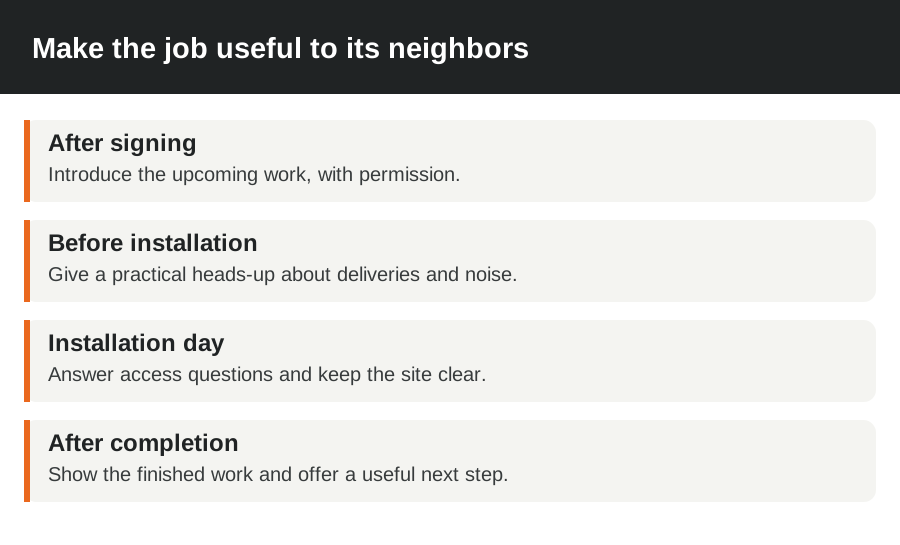
The job-site knock routine (graphic)
You've already got a reason to be on the street. Make that reason useful to the neighbors, with your customer's permission to mention the job.
| When | Reason for the visit | Useful next step |
|---|---|---|
| After signing | Let neighbors know about the upcoming roof work | Offer a roof condition report if they'd like one |
| Before installation | Give a heads-up about trucks, deliveries and noise | Share the office contact for access questions |
| Installation day | Help with a genuine job-site question | Answer briefly and keep people clear of the work area |
| After completion | Point out the finished work you're allowed to show | Offer an inspection or leave your details if invited |
Keep each address's outcome in the log. If they've declined, leave them alone. If nobody answered, one return at a different permitted time is a sensible test.
Don't leave a hanger that says you found damage unless you've actually inspected and documented it. A simple “We're working nearby” message does the job. The yard signs and door hangers playbook covers the printed pieces.
Is it worth it? Door math (calculator)
Count from doors to signed jobs, then include what you spent getting there. A rep who looks busy may be booking inspections that nobody attends.
Example: 50 doors a day x 30% answered x 10% of conversations booking an inspection = 1.5 booked inspections a day. If all attend and 1 in 4 signs, that's about one signed roof every 3 knocking days. The calculator keeps the unrounded result, about 2.7 days, behind that rounded planning number.
Try the door math calculator. Change the doors, answer rate, booking rate, attendance rate and inspection-to-sale rate to match your own records. The attendance input lets you see where a full appointment book loses value.
Use the same group of doors all the way through. Don't divide last month's signed jobs by this week's knocks. Keep retail and storm work separate, and allow time for newer estimates to reach a decision.
Then work out your acquisition cost: wages or commissions, travel, printing, software and the manager's time divided by completed, paid jobs from that group. Compare it with the gross profit those jobs produced.
What to say: 3 openers (original)
Keep the opener short: your name, the real local reason you're there and an open question. Replace the bracketed details with true ones before your rep uses it.
1. Beside an active job
Hi, I'm [name] with [company]. We're replacing a roof nearby this week, so I'm letting neighbors know about the trucks. What questions have you had about your own roof?
Use the customer's name or address only when they've allowed it. If the homeowner just wants to talk about parking, answer that question.
2. After a local storm
Hi, I'm [name] with [company]. We're a local roofing team offering photo reports after [the actual storm]. What have you noticed around the house since it passed?
Don't tell them their roof's damaged from the doorstep. Listen to what they've seen and explain what an inspection would involve.
3. Returning when nobody answered
Hi, I'm [name] with [company]. I stopped by while we were working nearby and left a card. What would you like to know about the roof work on the street?
If they didn't see the card, that's fine. Introduce yourself normally and let them choose whether to continue.
Skip openings that corner someone into a yes or no, or imply all their neighbors are getting insurance-paid roofs. The aim is a conversation about their house, not a contest to keep the door open.
Booking the inspection, step by step
Once they're interested, make the appointment easy:
- Explain the offer. “It's a free roof condition inspection with photos and video. We'll show you what we find.” Offer it only if that's your actual service.
- Take the pressure off. “If it looks sound, we'll tell you. If it needs work, we'll explain the options so you can choose.”
- Ask permission. “Would that report be useful to you?” You can ask whether they've any objection to an inspection, but a direct invitation is easier to understand.
- Offer real slots. Give two days you can keep, then a part of the day and a time. Ask who else they'd like involved and choose a time that works for them.
- Collect what's needed. Name, service address and the contact details they want you to use. Get permission for follow-up texts and calls, and honor stop requests.
- Send the appointment details while you're there. Include the date, arrival window, company contact and what the inspector will do. Ask them to reply if anything needs changing.
Inspect on the spot only when the homeowner's happy with it and your trained inspector can do it safely. A canvasser shouldn't climb a roof just to avoid losing an appointment. If access or weather isn't right, book the visit properly.
Before you leave, put the appointment in the shared calendar and assign the inspector. Give the office the homeowner's question, not just their number. “Wants to understand a ceiling stain before choosing repairs” helps the inspector prepare.
Earning trust at the door
Show your company ID, wear the right shirt and stand back from the doorway. Keep gates clear and don't walk around the house without permission. People should be able to verify your company without handing over their phone or signing anything.
Explain how you'll inspect. If they don't want someone walking on the roof, discuss a ground-level or permitted drone assessment where suitable. Tell them what you can and can't see from that view. Don't dress an incomplete view up as a full inspection.
When the roof's in good condition, say so and show the photos. If it needs a repair, explain the repair. A homeowner who gets an honest answer may remember you when the next job comes along.
Why the exit matters
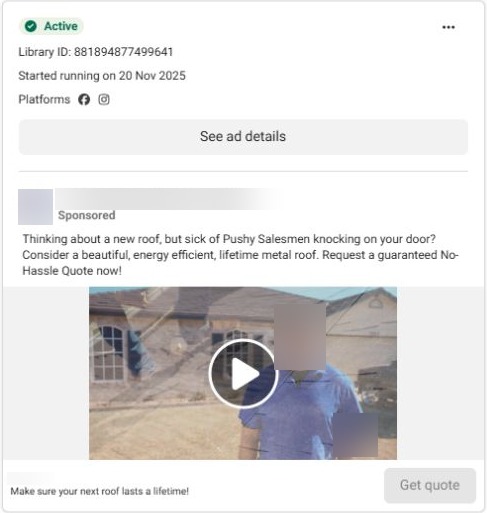
Example ad. Source: Meta Ads Library. Captured 28 October 2026.
This advertiser leads with frustration about pushy salespeople. That's a useful reminder: the homeowner may judge your visit against the last person who knocked. Show your identity, give a real reason for being there and make it easy to say no. The ad's product promises aren't the lesson to copy.
| What the homeowner says | A respectful response |
|---|---|
| “Not interested” | “Understood. Have a good day.” Mark no further visits. |
| “I'm busy” | “Of course. Would you like our card, or should I leave it there?” Leave unless they ask for a return. |
| “We've got a roofer” | “That's good. I'll leave you to it.” Don't attack their choice. |
| “I'm renting” | “Thanks for letting me know.” Offer company details they can pass on if they want. |
You're protecting your company's reputation on a street where your crews still need to work.
After the knock
Log the outcome before the next door. For a booked inspection, the office should see the appointment and the homeowner's question immediately. For an invited callback, record the date and who'll make it. For no answer, leave a permitted hanger and choose one useful return time.
After you've sent an estimate, move the homeowner into the estimate follow-up process. Don't leave them in both a canvassing reminder and an estimate sequence. A reply should pause the automatic messages so someone can answer it.
You can support the area with Facebook ads for roofers, using a real job photo and the same inspection offer. We run these as part of our Facebook and Instagram ads for roofers service. Choose the local service area available in the platform; don't sell this to your team as a way to identify or reach every individual door you've visited. Ask inquiries how they heard about you, because a sign, knock and ad may all play a part.
Storm canvassing
Work where you're local, licensed where required and able to take the work. Start with past customers and nearby jobs. A weather map can help you plan a route, but inspection evidence tells you what's happened to a particular roof.
Keep the offer about documenting the roof. Don't promise claim approval, a free roof or payment of the homeowner's deductible. Leave coverage decisions and claim representation to the proper roles. The storm roofing plan covers the homeowner handout and capacity limits.
If your photos don't support storm damage, don't push a claim. Explain any repair you can actually recommend and let the homeowner decide. Your rep's confidence shouldn't be measured by how hard they argue for insurance work.
Permits and no-knock rules
Before the first shift, get the town's solicitor requirements, allowed days and hours, no-knock list and access rules, then respect posted no-soliciting signs. Put the approved area and time window on the rep's route sheet so nobody has to guess at the gate.
If you're signing covered contracts at the home, include the cancellation notices and forms the sale requires. The FTC Cooling-Off Rule gives buyers 3 business days to cancel certain at-home sales; state rules may add rights. Get the right contract process ready before you ask a new rep to sell.
Don't use a general internet “best time to knock” as permission to work a town. I'd start with daylight weekday visits inside the local window and test when people answer. A missed door is less expensive than a complaint you could have avoided.
Running a canvassing team (short)
Give each rep one clear patch, a working appointment calendar and a manager they can reach. Practice the opener, inspection invitation and exit before sending them out. New reps need a ride-along and useful feedback, not just a daily number.
Practitioner routines often suggest 60 to 100 doors for a full canvassing day. I'd begin with the 10 to 20 permitted homes around each active job, then expand once your records show attended inspections and worthwhile work. Adjust for walking distance, weather and conversation length.
For pay, an hourly base gives you room to train and manage the routine; a commission rewards the agreed result. A base plus a bonus can combine those goals. Define a qualified appointment, duplicate lead and payment event before the first shift, and have payroll handle the applicable pay rules. Don't make reps guess whether a cancellation means they lose a bonus they've already earned.
Review quality alongside volume. Are addresses correct? Did the inspector arrive? Did the homeowner expect the visit? Is anyone reporting pressure?
Tracking
Download the blank canvassing tracker. Use one row per visit and a shared property ID so repeat visits don't look like new homes.
| Field | What you'll record |
|---|---|
| Date, rep and territory | Who covered which streets and when |
| Property ID and address | The place visited, with duplicate checks |
| Answered and outcome | No answer, declined, callback invited or inspection booked |
| Follow-up date and owner | Who'll do the next action and when |
| Appointment and attendance | Scheduled time and whether the inspection happened |
| Estimate and signed job | Which opportunities moved on |
| Contact permission and stop status | What contact was invited and when to stop |
| Notes | Useful roof questions, without unnecessary personal details |
Keep the tracker private with access for the people doing the work. Don't upload a customer list to a public spreadsheet. A simple shared sheet is enough for a small test; a field app earns its place when reps need shared maps, clear territories and records that work on their phones.
After the next 3 jobs, review the whole path. Low answers suggest a timing or route issue. Bookings without attendance suggest the appointment promise or reminder needs work. Attended inspections without suitable jobs suggest you should change which homes you're approaching. Fix the weak step before adding more reps.
See the complete roofing marketing guide for the other sources that can support the same local work.
Want the local campaign connected?
Our roofing marketing agency can support your job areas with Facebook and Instagram campaigns and follow-up until the lead books. Packages start from $297/month; ad spend is separate. Your team handles the visits and inspections, with one clear handoff to the booking process.
Tell us your area and the work you want, and we'll show you the first 30 days we'd run.
FAQ
Does door knocking work for roofing?
Yes, it's worth testing around your active jobs. Start on the next 3 jobs and measure attended inspections, signed roofs and the cost per completed, paid job. You'll know whether to expand without relying on someone else's door-to-sale claim.
What do you say when door knocking for roofing?
Introduce yourself, give a true local reason for the visit and ask an open question. Beside an active job, explain the work and ask what questions they've had about their own roof. Offer the inspection after they're interested, and leave when they decline.
Do I need a permit?
Check the town's solicitor requirements before you knock; many towns require a permit or registration. Get the allowed area, days and hours onto your route sheet as well. The permits section above gives your manager the pre-shift checklist.
How many doors should a roofer knock a day?
Start with 10 to 20 permitted homes around each active job. For a dedicated full-day canvasser, practitioner targets run around 60 to 100 doors, but track conversations and attended inspections alongside that count. A long useful conversation can be worth more than rushing the next ten doors.
Is door knocking legal on Sundays or evenings?
Choose daylight weekday visits until you've checked the town's permitted days and hours. Sunday and evening access is a local-rule question, so use the actual local window rather than a national timetable. Keep the homeowner's preferences in the log for any invited return.
How much do roofing canvassers make?
Published hiring ads show starting base pay around $15 to $20 an hour, with bonuses or commissions on top. The job's duties, area and payment event change the offer. Compare guaranteed base pay and the exact bonus conditions, rather than a headline annual earnings claim.