
For general contractor yard signs, start with an 18 by 24 inch design, one clear service line and a large phone number. Use it at a customer-approved jobsite where the work backs up the message. An addition sign beside the work helps a neighbor recognize the job you build.
Our remodeling marketing agency can help connect your selected website, local marketing and booking follow-up. The sign itself is a separate print purchase. Here's how I'd choose the design, check the order and test a small batch.
Put 3 things on the sign
Give the viewer three things: the job, the company and a way to contact you. The service should be easy to spot before someone reads the smaller details.
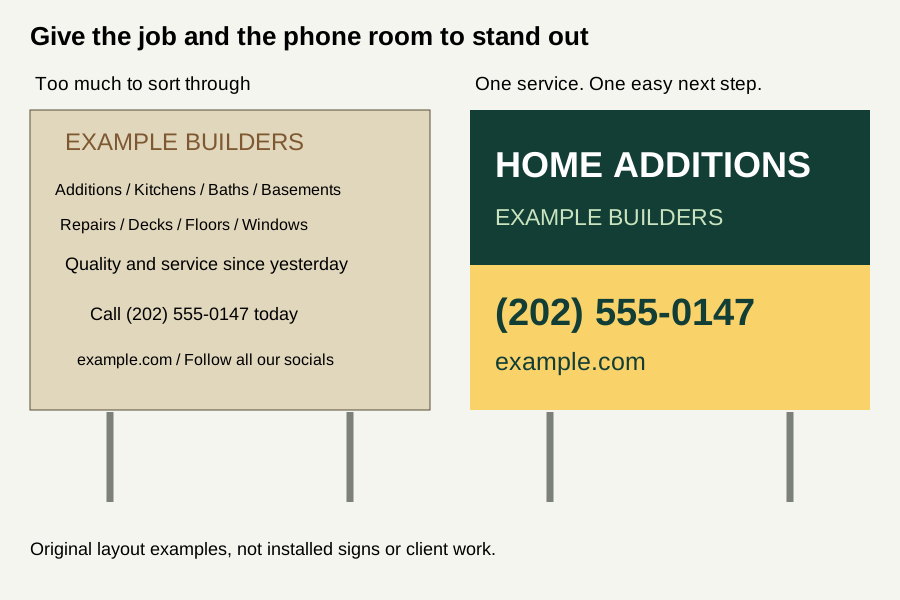
The design on the right is an original layout example, with a fictional company and reserved example phone number. It shows a hierarchy your printer can adapt. It's not a photo of an installed sign or a claim about jobs won.
Use a line that fits the work you want:
- Home additions: when the project shows the extra space you're building.
- Kitchen remodeling: when neighbors are likely to recognize that type of work.
- Bathroom remodeling: for full remodels if that's the scope you sell.
- Basement remodeling: when you're turning unused space into finished rooms.
- Whole-home remodeling: when the scale of the job matters more than one room.
A general contractor can use the same company colors and contact details across those designs. Change the service line to match the job. You'll build recognition without printing the same broad service list on every site.
Keep contrast strong and use plain type. Print a paper proof, put it at the planned viewing position and check it while standing safely off the road. Ask someone who hasn't seen the design what they read first. If they name the logo but miss the service and number, change the layout.
Choose the size and material
Start by comparing 18 by 24 inches with the space available and the local sign rules. It's a common supplier option, not a promise that every driver will read it at a given speed. A larger sign still needs a simple message.
| Choice | When I'd consider it | What to check |
|---|---|---|
| 12 by 18 inches | A smaller permitted space or a close pedestrian view. | Whether the service and number remain clear. |
| 18 by 24 inches | A starting size for a temporary jobsite sign. | Allowed dimensions, stake and viewing position. |
| 24 by 36 inches | More room where the site and rules allow it. | Frame, wind exposure, handling and total cost. |
| Corrugated plastic | A light sign you'll move between jobs. | Thickness, fluting direction and matching stake. |
| Aluminum | A more rigid sign for a suitable frame or longer use. | Mounting, edges, storage and replacement cost. |
Suppliers list 4mm corrugated plastic and aluminum options, along with single- and double-sided printing. Treat lifespan claims as supplier guidance; your weather, handling and storage affect how long a sign stays presentable.
Double-sided printing makes sense when both faces will be seen. A sign against a solid fence may only need one printed face. Ask the printer to include the stake or frame in the quote. Cheap panels aren't a complete order if you've still got no way to stand them up.
Check how you'll move the signs. A crew needs a place to keep spare stakes and protect panels from tools and materials. One person responsible for clean, straight signs will do more for the presentation than another line of small text.
3 print designs worth learning from
These are real supplier templates from VistaPrint's construction gallery, captured October 30, 2026. They are print layouts, not customer jobsites or evidence of lead results. Use the design lesson, then replace the placeholder details with your own business information.
1. A dark panel with a separate contact strip
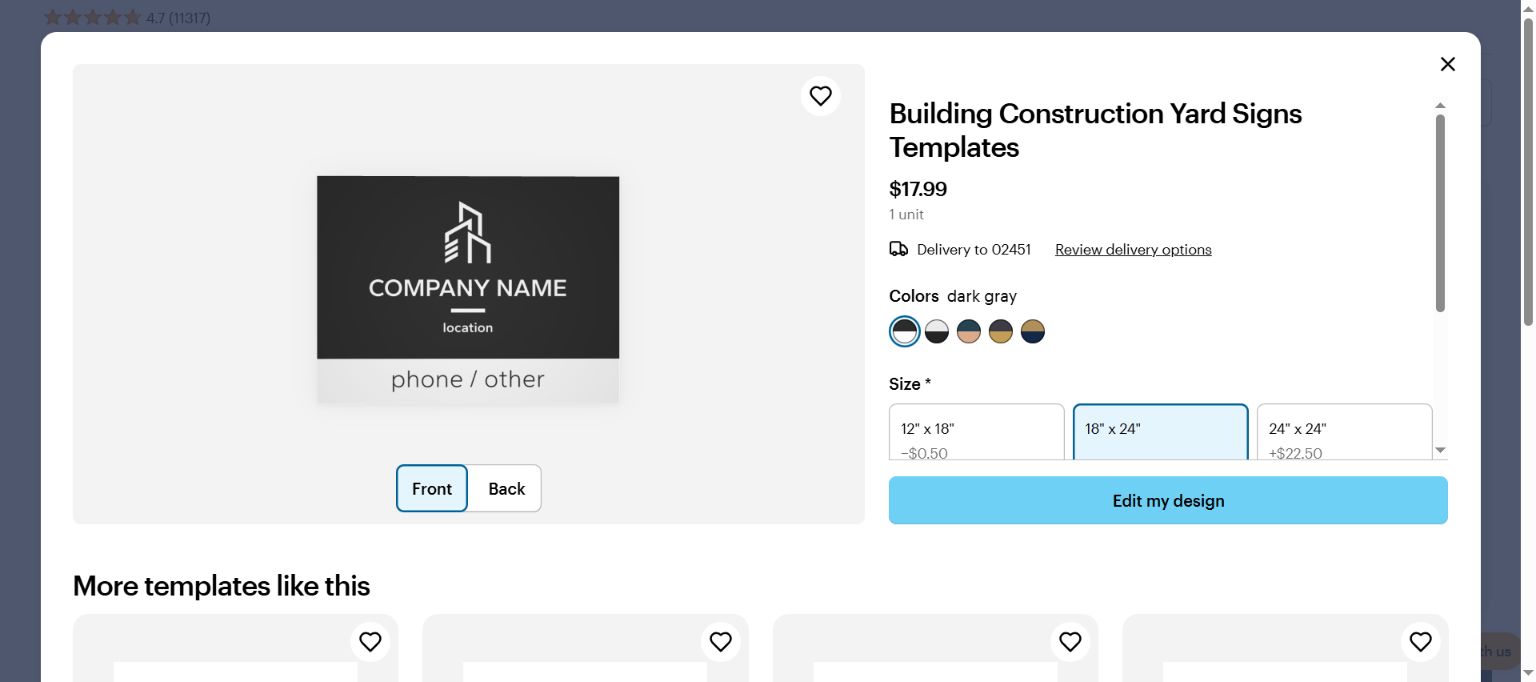
- What's good: the contact strip has its own space.
- What to copy: separate the phone number from the main message.
- What I'd change: make the job type larger and reduce the logo area.
2. A simple blue company sign
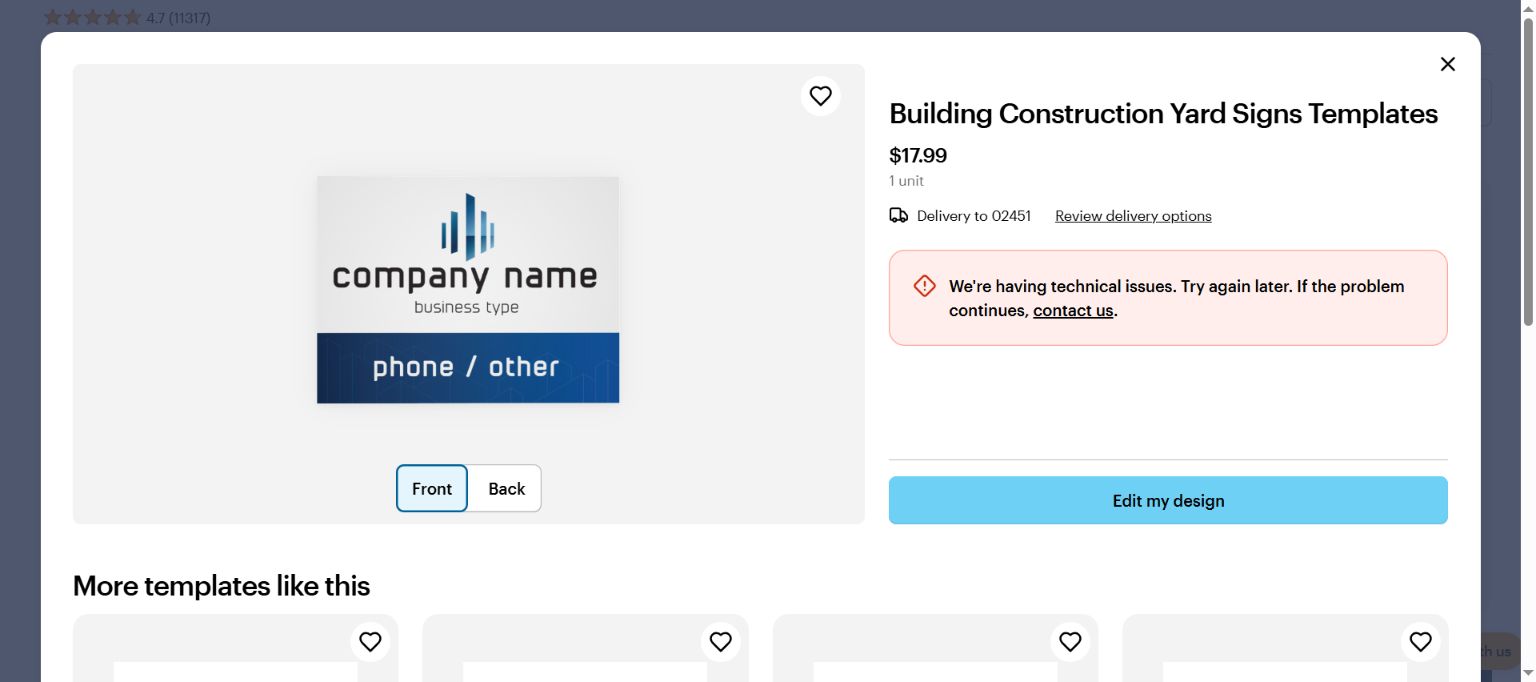
- What's good: a restrained color scheme makes the design easy to organize.
- What to copy: keep the company colors consistent across jobsite signs.
- What I'd change: give the service and phone priority over a decorative mark.
3. A warning template to adapt carefully
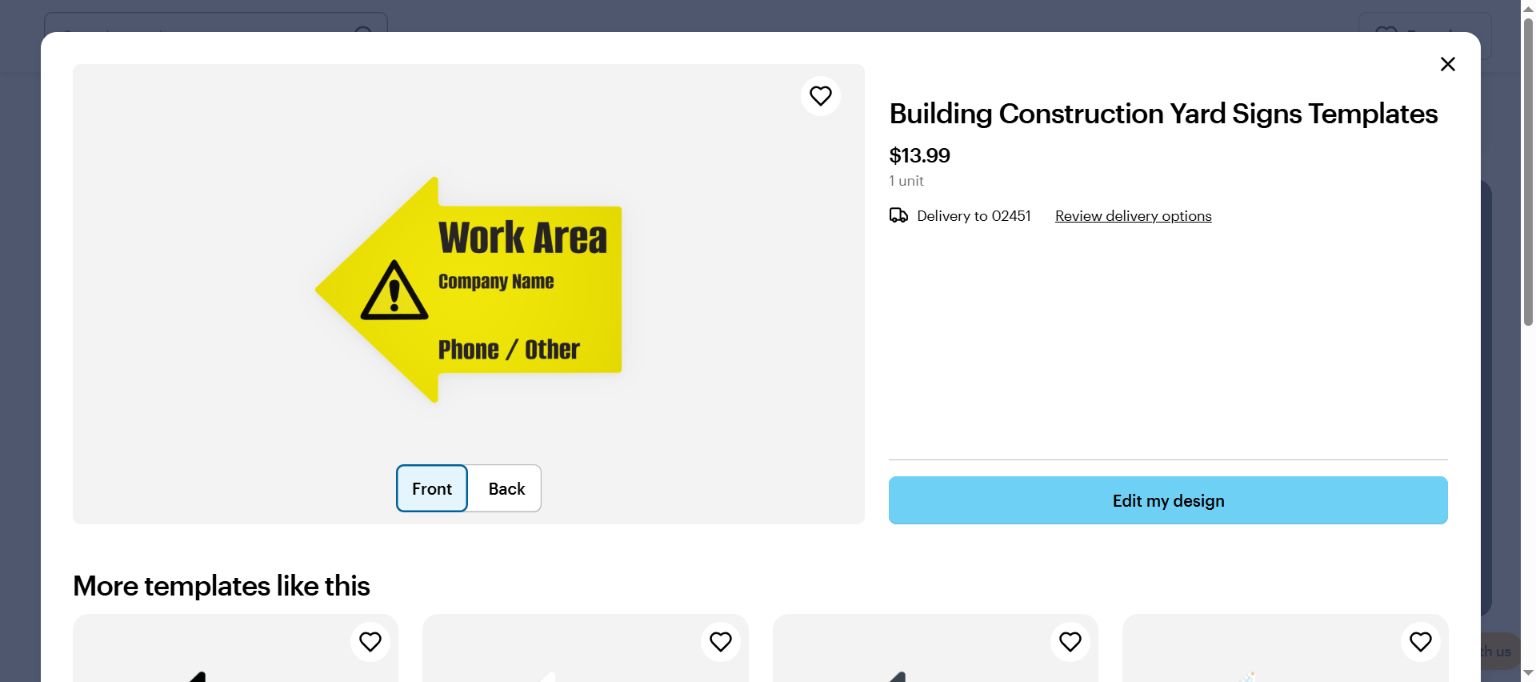
- What's good: the black message stands out against yellow.
- What to copy: keep the contrast.
- What I'd change: this is a work-area arrow, not a remodeling ad. Replace the warning with your job type and use a plain rectangle.
The observed 18 by 24 inch, single-sided preview showed $17.99 for one unit, excluding delivery and product options, according to VistaPrint. That is one displayed configuration, not a market average or the delivered price of a batch. Get the exact quantity, sides, material and hardware priced before ordering.
What a small sign test costs
Add printing, stakes, delivery, tax and the time spent placing and collecting the signs. Then count the inquiries and finished jobs from the test. The delivered unit price is only part of what it costs.
Open the yard-sign pilot calculator
For a teaching example, suppose 20 signs cost $300 delivered with hardware, and placing and collecting them costs another $200 in staff time. The test costs $500. Five inquiries would cost $100 each. If one becomes a finished, paid job, the cost is $500 per job.
Those are made-up test figures, not a printing quote or expected response rate. If nobody responds, you've still spent $500. The calculator shows no inquiries or finished jobs yet rather than dividing by zero or pretending the campaign was free.
Buy for the placements you have. If three customers have said yes, start with those three sites and a sensible spare supply. Twenty printed signs aren't twenty places where you can use them. Reusing a clean sign on the next approved job can spread the printing cost, while placing and collecting it still takes time.
Give the printer this ordering checklist:
- Finished size and the material thickness.
- Quantity and one- or two-sided printing.
- The final service line, company name, number and web address.
- A proof showing the text at the finished size.
- Stakes or frames that fit the panel.
- Delivery, tax and the date the order is needed.
- The total delivered price and the cost of a later small reorder.
Read the number aloud from the final proof, then call it. Open the web address on a phone. A spelling error or dead contact point is expensive to discover after the box arrives.
Place it where the job backs it up
Choose a customer-approved position that people can notice safely and that local rules allow. Ask about the placement and collection date as part of the job conversation. A homeowner should know who'll take the sign away.
Check the local sign rules, HOA requirements and the road authority's boundary before installing. Customer permission doesn't cover public right of way. For example, Virginia's transportation department prohibits signs on or overhanging state right of way and says the boundary varies by road. Use the authority responsible for your site; Virginia's guidance isn't a nationwide setback rule. Keep signs clear of sightlines, sidewalks and access.
Put the practical details on the job sheet: customer approval, location, installation date, person responsible and pickup date. If the homeowner asks for it to come down sooner, collect it. That keeps a small marketing task from becoming a customer-service problem.
Match the sign to what neighbors can see. A home addition offers a clear connection between the message and the work. A kitchen or bathroom project may be less visible, so the sign and a matching project page need to explain more of the story.
Send neighbors to the right project
Use a short address that takes the homeowner to the work you want to discuss. An addition sign should lead to an addition page, with similar projects, your area and a clear call or consultation request.
The page can answer four questions: What do you build? Where do you work? What have you done that's similar? What happens when I contact you? Your remodeling website should answer those questions without making someone hunt through a gallery.
Keep the phone number easy to read. A QR code can be a second option for someone standing still nearby. It's a poor replacement for the main contact details, especially when most viewers are passing the property. Test the code on the printed proof at the size you'll use.
If you use a separate number or short link for the sign test, check that it reaches the office and the intended page. Ask callers how they heard about you as well. Someone may remember the sign and later search the company name, so the special link won't catch every introduction.
Turn a jobsite into the next conversation
Give the crew one sentence for a neighbor who asks about the work:
“We're building an addition here. If you're planning something similar, our office can explain the first call and whether we're taking work in your town. Here's the number.”
The crew can be friendly without pricing another house from the driveway. Let the office ask about scope, budget and timing, then book the right next step. Use the remodeling sales process for that first call.
Keep a few clean cards for people who ask, rather than turning every delivery or break into a sales round. Respect the homeowner's space and the neighbors' day. A tidy site, clear communication and a professional sign all contribute to the impression of the company.
For a finished project, ask whether the customer is happy for you to show photos and describe the work. Use the project to answer a future homeowner's question: why the layout changed, what you built or how the extra space connects. That gives the next sign visitor something concrete to learn from.
Review it before reordering
Review the test by placement and time on site. A sign displayed for a week on a quiet street has had a different chance from one displayed for a month where neighbors walk past. Record the dates so you can interpret the inquiries fairly.
Keep the review small: signs placed, display dates, inquiries, appointments, signed jobs, finished jobs and total cost. Note whether callers mention the sign, the neighbor or a later search. You'll see both direct calls and introductions that helped another channel.
Check the stock before buying more. Count usable panels and stakes, damaged pieces and signs still out at finished jobs. A collection problem can look like a printing shortage when the same signs could be working again.
If the sign gets attention but no calls, check the message, contact details and page. If calls are mainly small repairs while you want full remodels, make the service line clearer. Change one part of the test, then compare. The remodeling lead-source guide can help you judge this test alongside other channels.
Frequently asked questions
What size yard sign should a general contractor order?
Start by pricing 18 by 24 inches and checking the allowed size at your sites. Use a paper proof to judge the text from a safe viewing position. Choose a larger or smaller option when the location, message and rules call for it.
Should the sign list every service?
Choose one main job type. Use your company name and contact details consistently, then match the service line to the project or the work you want nearby. A short message is easier to organize than a long list of trades.
Does every yard sign need a QR code?
No. Make the phone number and service readable first. A QR code can help a person who is standing still, provided the printed code works and leads to the right page. Keep it secondary.
How many signs should we buy?
Count approved placements and likely reuse first. Add enough spare panels and stakes for the jobs you've got planned. Order a small test before buying a large batch of an untested design.
Your next step
Choose one service line, get a complete delivered quote and test the proof before printing. Start on the customer-approved jobs you have, with someone responsible for collecting each sign. If you'd like the website and booking behind it connected, see marketing for remodeling contractors. Selected 9xLocal packages start from $297/month, with no setup or build fee.
Sources
- VistaPrint: Building Construction Yard Signs Templates. Verified October 30, 2026.