
Our SEO services for remodelers cover the managed buying decision. This guide shows what to inspect yourself, what to ask for and how to judge progress beyond a traffic chart.
Check searches that should bring projects
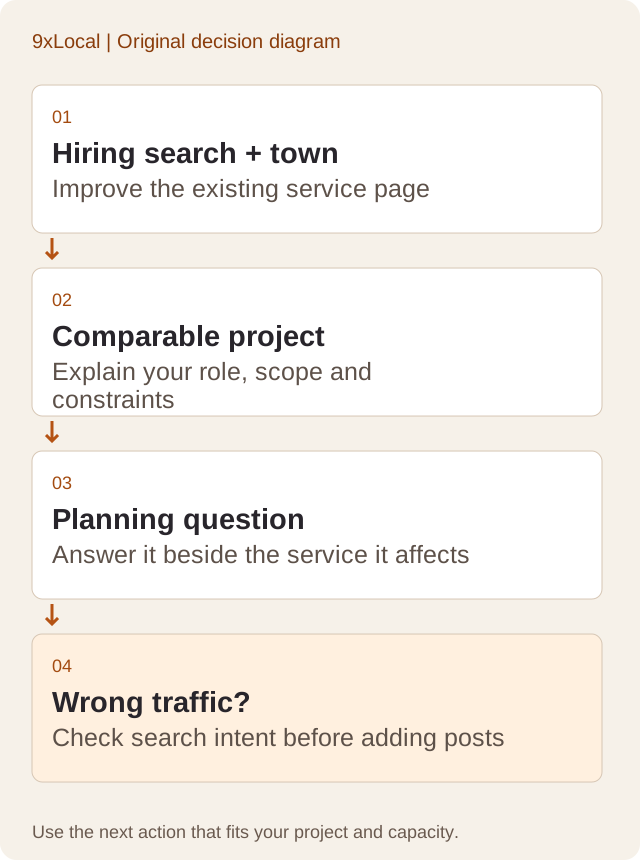
SEO means helping people find your business in unpaid search results. For a remodeler, start with a homeowner looking for the work you sell in an area you serve.
Write down a small set of job-and-town searches. Include additions, whole-home renovation, basement finishing or your other main services. Use the words a homeowner would say on the first call. A broad “general contractor” search can include work far outside the projects you want.
Look at what appears for each search: local business listings, service pages, project stories or informational answers. Note the town in the query, date and device. A search from your desk is one view of the results; it doesn't establish your position across an entire city.
| Search example | Page that should answer it | What the homeowner needs |
|---|---|---|
| Whole-home renovation contractor [Town] | Your whole-home service page. | Scope, comparable houses, process and contact. |
| [Business] attic renovation projects | Your relevant project collection. | Your role, constraints and the work shown. |
| Do I need plans before calling a remodeler? | A short process answer on the service page. | What the first conversation covers. |
| DIY attic conversion instructions | Educational results. | A different intent from hiring your team. |
Check whether you already have a page for the search. Improve the existing owner before creating another page for the same job and area. Two weak pages with nearly identical promises give you twice the upkeep and no clear answer about which one to improve.
SEO cost and time: plan for months
For a broad price comparison, Ahrefs reports that most business spending in its survey falls between $500 and $5,000/month. Its research surveyed 439 SEO providers across markets and service types, rather than US remodelers alone. Compare the monthly tasks and project scope before comparing the headline fee.
For timing, Ahrefs gives three to six months as a typical range in its industry poll. A new site, weak starting position or competitive area can take longer. Use the first weeks to inspect the work itself, then look for relevant searches and inquiries as the changes settle.
Ask for the first page to fix, the profile work, the next projects needed and who handles each task. A six-month plan made only of blog titles leaves the main buying page out of the conversation.
Use the cost planner to include your team's contribution. Example: $650/month in a external service you choose plus two hours of your own time valued at $60/hour totals $770/month, or $4,620 over six months. Those are teaching inputs you can replace, not a quoted 9xLocal tier or market rate for owner time.
A six-month allowance helps you plan cash; it isn't a promise that rankings arrive at the end of it. If the provider can't show the agreed page and profile work in the first month, ask about that immediately.
Set up an accurate Google profile
Check the real business name, phone, website, hours and service area. Choose a category that describes the business you run, then add the services you provide. Make the information useful to someone deciding whether to contact you.
Google's rules require an eligible business location and accurate representation. A home-based contractor who doesn't receive customers at the address should handle address visibility as a service-area business. A mailbox or borrowed address doesn't create a branch.
Make the profile and website agree on the main facts. A homeowner who finds one number on the profile and an unanswered old number on the site faces a contact problem even before rankings enter it.
I'd add clear photos of real work, where you have permission, and a destination that represents the business and helps the visitor. The homepage can be right when it answers that need; there's no blanket reason every profile must point to a separate town page.
Google describes local results mainly through relevance, distance and prominence. You can improve how clearly the business and its work are represented. You can't make the office physically closer to every searcher by adding town names.
Build the service page first
Explain the service in words you'd use on the first call. A whole-home renovation page should say which work you take, how design is handled, how projects are planned and what the first call covers.
I'd use this order:
- Name the service and real coverage.
- Explain the situations and scope you handle.
- Show a comparable project with your role clearly stated.
- Answer practical questions about drawings, disruption, timing and budget discussions.
- Give a phone number or short consultation form and explain what happens next.
An attic renovation page, for example, can explain that headroom, access and the existing structure need assessment. State your role in that assessment without promising that every loft can become a bedroom. Use the questions your office already hears.
Town pages earn their place when they add distinct information: local projects, coverage or relevant housing details. Changing the town name in an otherwise identical page gives the next homeowner little to learn. Start with the strongest service page and expand where you have something real to say.
The remodeling website guide covers page layout and the form test when those need work too.
Turn a real job into proof
Use a completed project to explain what your company contributed. A beautiful finished room doesn't tell the reader whether you designed it, built it, supplied one trade or managed the whole job.
CRD's public site groups projects with recognizable job and area labels, including whole-house work, additions and basements. The lesson is how a visitor can find a comparable project; the site isn't evidence of a particular lead or ranking result.
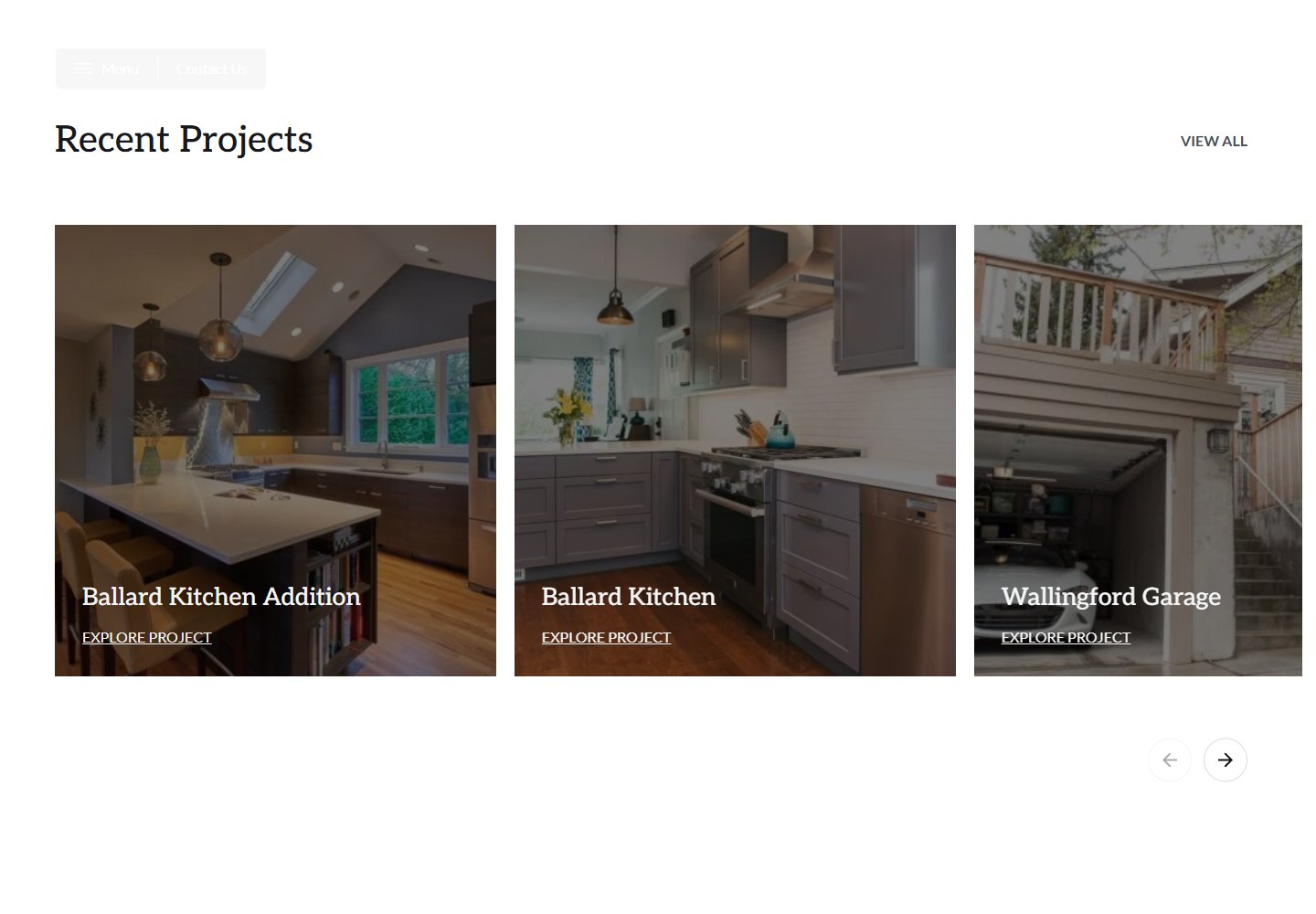
Website example: CRD. Captured October 30, 2026. Study the service-to-project choices, then organize your own evidence around the work you sell.
Here's an original input sheet to use with your next project. Leave a field blank until the team supplies the facts:
Project facts for a service page
Project type: {attic/multi-room/addition/other}
Town, without the private street address: {town}
Homeowner's starting problem: {what needed changing}
Our role: {design/build/trades managed/other}
Main constraint: {access, structure, occupied rooms or another real issue}
Scope delivered: {work we completed}
Photos approved for use: {filenames and permission record}
Next related service: {the service page this project supports}
Turn those notes into a short project explanation and link it to the service it demonstrates. Describe the starting problem, the decision and the result visible in the photos. Use your own words instead of copying a homeowner review into a project claim.
Reviews, listings and local links
Ask for honest reviews after real experiences, with no reward, prescribed rating or positive-only selection. Keep that request separate from a referral incentive. Reply in a way that helps the customer and protects private project details.
BrightLocal reports that 97% of consumers read local-business reviews in its 2026 survey. That's evidence about consumer behavior, not a rule that a remodeler needs a particular review count to rank.
Correct important business listings when the name, phone, website or address is wrong. Focus on errors that confuse people or misrepresent the business. You don't need to buy an arbitrary directory count to begin.
For links, start with real relationships: a supplier who lists contractors, a trade association, a designer's project credit or a community project you took part in. Ask whether the reference helps someone understand the business. A paid count of unrelated links doesn't answer that question.
Keep the work proportionate. One old phone number or missing service page can deserve attention before another month of general content.
Make answers clear in search and AI
Write short answers to the questions that affect hiring. Keep the service, area and important condition together so an answer still makes sense when read on its own.
For example, a page can answer whether drawings are needed before the first call, who handles design, which towns you cover and how you approach work in an occupied home. Use the company's real process and link to a relevant project where it adds proof.
Here's an original wording pattern to adapt:
Answer a planning question on the service page
Do I need drawings before calling?
You can contact us at {the stage your company accepts}. Our first conversation covers {scope, town and planning needs}. If the project needs {design or structural input}, we'll explain who handles it and what information is needed before an estimate.
Keep important information in readable page text. A service hidden only inside an image or a complicated gallery is harder for people to use. Structured data can describe the page and business, but it doesn't create a special claim to AI placement.
Google's normal search requirements apply to its AI features too. Start with accessible, helpful pages and consistent business facts. Record a citation if you observe one; don't treat a new schema field as a booked-job result.
Measure inquiries that fit
Separate page discovery, contact actions and sales outcomes. A click on the phone button isn't necessarily an answered call. A form isn't necessarily a project you take. A booked consultation still has to happen.
Keep a simple change log: date, page or profile change, reason and next review. Then ask whether the right searches are finding the right page and whether the office is hearing from homeowners whose work fits.
Example: an attic-storage article starts attracting DIY visits, while inquiries about full attic renovations stay flat. Before buying more articles, inspect the searches and destination. The problem may be that the site is answering a different reader from the person who hires you.
If the right people find the page but few contact you, inspect scope, proof and the next step. If they contact you and wait, fix response. If good visits never progress, use the remodeling sales process to inspect the estimating and proposal conversation.
Compare similar periods and job types. Keep each homeowner's original inquiry month with later planning, signed work and payment. That gives search work a fair review without crediting it for every visit on the site.
A practical monthly SEO routine
I'd keep one short review with the owner, office and person doing the search work. Bring the main service page, recent inquiries and the changes already made.
Choose one improvement that removes a visible gap. That might be correcting an old number, explaining your design role, adding a permitted project or answering a repeated homeowner question. Assign an owner and publish the selected change.
Review the profile when hours, services or contact details change. Add project proof when you have something worth showing. A fixed posting quota or geotagging routine isn't a substitute for accurate facts and useful pages.
Use the remodeling marketing plan when deciding how SEO fits with other channels. If you need inquiries while search work develops, compare Google Ads for remodelers as a separate funded test. Keep its spending and outcomes separate from unpaid search.
Frequently asked questions
Should I create a page for every town?
No. Create an area page when it gives a homeowner distinct help and represents real coverage. Improve the existing service page first when the proposed pages would only swap town names.
Do geotagged photos guarantee Maps rankings?
No. Use accurate photos and project context because they help people judge the work. GPS metadata isn't a ranking promise or a reason to skip the service page.
How should I ask for reviews?
Use a neutral invitation after a real experience. Let the customer choose the words and rating, with no incentive. Make it easy to find the review link and respect a refusal.
Do I need a separate website for AI answers?
No. Start with readable service pages, clear business information and direct answers. Keep the evidence on your main site and observe what happens before buying another platform.
Your next step
Choose one hiring search and inspect the page that should answer it. Fix the business facts, explain one comparable project and test the first contact. That gives the next SEO conversation a concrete job.
For managed help, SEO services for remodelers can sit in your 9xLocal plan. We're your agency replacement for more booked jobs, with packages starting from $297/month and separate ad spend when you choose advertising. See if we're a fit.
Sources
- Ahrefs: SEO Pricing: How Much Does SEO Cost? Verified October 30, 2026. Broad provider survey and monthly spending range.
- Ahrefs: How Long Does SEO Take? Verified October 30, 2026. General poll-based timing range.
- BrightLocal: Local Consumer Review Survey 2026. Verified October 30, 2026. Local-business review readership.