
Our remodeling marketing agency connects the ads you choose, website and follow-up. The goal is more booked consultations that your team can turn into signed projects.
Choose the first remodeling campaign
Pick a service with room in the schedule, photos you can show and enough gross profit to carry the cost of winning it. An impressive contract value alone isn't enough. A difficult addition with little margin can be a worse target than a smaller, repeatable renovation.
Give the campaign a simple brief: the job, towns served, smallest scope you take and next planning opening. For example, an addition contractor might take new planning conversations now for a later build. A company that only wants full renovations should say so before a shower repair fills the estimator's calendar.
Ask the provider to show the first searches they'd target and exclude. “Home addition contractor [Town]” belongs in a different conversation from “addition plans free.” Searches for employment, DIY instructions and services you don't sell need attention too. Exclude the wrong meaning of a search without accidentally blocking a service you do want.
You should be able to follow the logic from search to job. If the proposal starts with a large keyword list and never names the work you'll build, ask for a smaller, clearer plan.
What we manage each month
We set up and run the Google Ads work selected for your business. The quote should name the campaigns, page work, tracking and ongoing review. These are the tasks to discuss, with extra services marked as chosen scope:
- Campaigns and searches, if chosen: group searches around the remodeling services you want, inspect what people typed and remove poor matches.
- Areas and spending, if chosen: choose the places you serve, review location settings and keep spending inside the chosen budget.
- Landing pages, if chosen: send the homeowner to a page about the advertised work, with matching projects and a clear consultation request.
- Tracking and review, if chosen: test calls and forms, then use your office's feedback to distinguish a contact from a job worth estimating.
The monthly conversation should be concrete: which searches bought clicks, which inquiries fit and what we're changing. Your team supplies the sales outcomes and construction judgment. A report full of impressions won't tell us whether a basement campaign is attracting full remodels or small waterproofing requests.
There's no fixed promise of campaign, page or revision quantities in the starting package. Get the work you choose and its price together before buying.
Why remodeling contractors pick 9xLocal
9xLocal is your agency replacement for more booked jobs. The chosen plan can connect the ad promise with the page and the first reply, so you're dealing with one team across those gaps.
You keep control of the business assets. Ads run in your accounts. Your domain and content stay yours, and we hand over all website files if you leave. Service is month to month with a 30-day money-back guarantee.
Your latest work can keep the site current too. You or your crew share project photos through the app; a strategist reviews the material before website updates go live. Chosen remodeling website design is a separate buying decision when the destination needs more than ad changes.
AI does the heavy lifting, and experienced people review and run the work. Your office tells us which projects fit, handles the estimate and closes the sale. That feedback helps the next campaign decision.
What PPC management and ads cost
For a broad management-price comparison, Clutch reports PPC company rates of $100 to $149/hour in its 2026 pricing guide. That's across PPC work on its platform, rather than a remodeler-only monthly retainer. Ask for a monthly quote against the work you need.
9xLocal packages start from $297/month, with no separate setup or website build fee. The package price depends on the work you choose. Google spend goes directly to Google, without markup from us. The management fee, media and your office time are three different costs.
I'd discuss around $3,000/month in media for a focused remodeling Search test when your margin and cash can fund it. That's an editorial starting recommendation, not Google's minimum. A small area with limited demand may need a smaller test; an expensive, busy market may need more.
LocaliQ reports about $166 per lead for Construction & Contractors (General) in its 2025 home-services Search study. Its sample covered 3,211 US campaigns running from April 2024 to March 2025, and its reported averages are medians. The category includes more than remodeling, and a lead isn't a signed addition.
Use the cost calculator with your own quote. Example: $2,700 media, $600 assumed management and $700 office handling total $4,000. Two finished, paid jobs cost $2,000 each to win; one costs $4,000. The assumed fee is a worksheet input, not a 9xLocal tier.
With no finished jobs, the tool keeps the $4,000 spending visible and shows job cost as pending. It won't divide by zero or claim that getting leads was free.
Search ads or Local Services Ads?
Compare both when your business and area qualify for Local Services Ads, often called LSA. Search ads charge for clicks and let you lead with a particular service and destination page. LSA charges for valid leads through the listing and has its own eligibility and screening requirements.
Ask which product the quote covers. LSA management and a Search campaign are separate choices. An eligible general-contractor category also doesn't mean every advertised service fits the work your team wants.
For an addition company, I'd compare the available LSA services with a focused addition Search campaign. Keep the outcomes separate so you can judge each one. If the business needs private commercial bid invitations, broad homeowner ads are a poor starting choice. For commercial company marketing, see our construction marketing agency.
From a search to a booked consultation
Look at a real service destination before judging ad wording. Neil Kelly's additions page separates bump-outs, larger expansions and second-story work, with buttons for a design consultation and project examples. It's an example of turning a broad addition need into specific project choices.
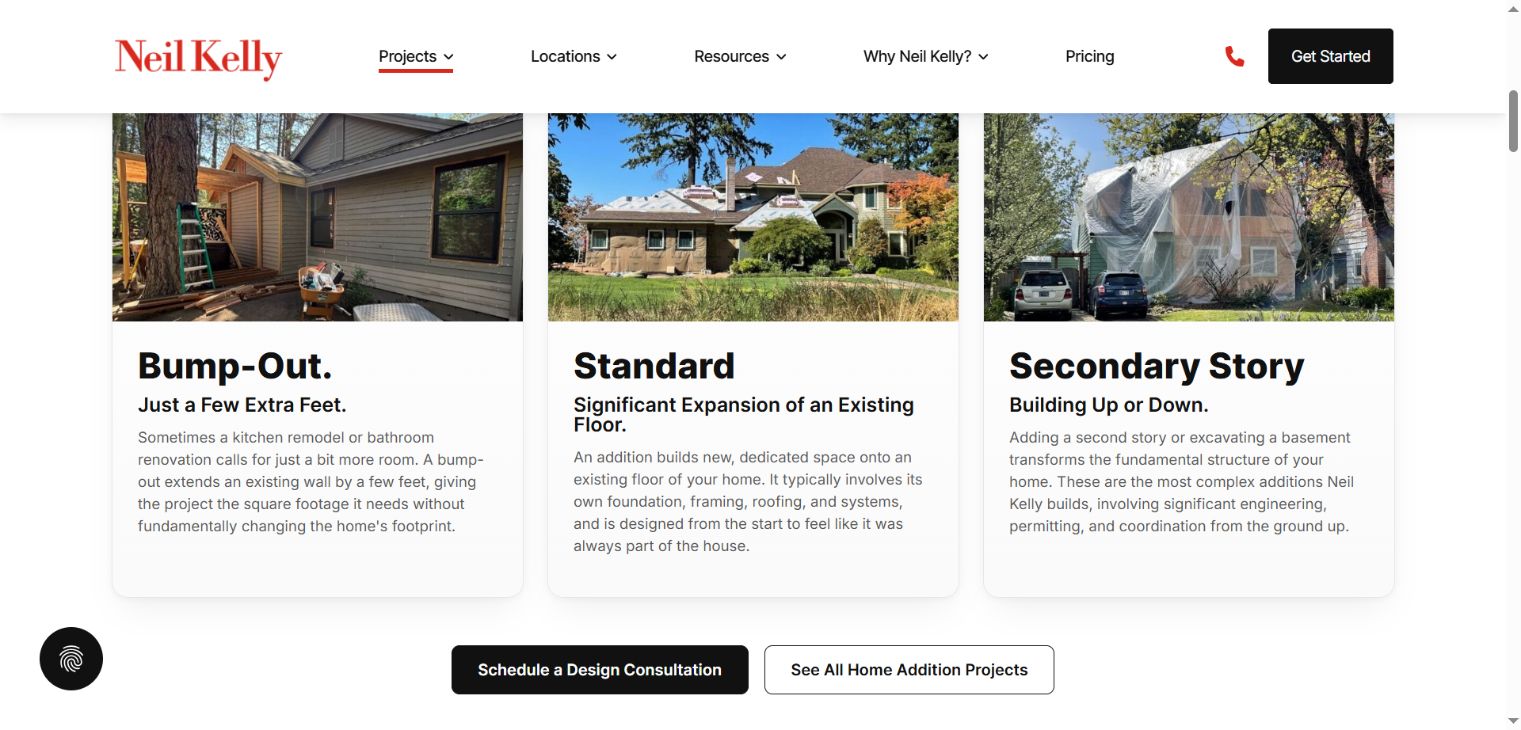
Website example: Neil Kelly. Captured October 31, 2026. This is a public service page, not a captured ad or a measured conversion result.
What to copy: name the addition types you build and show the next step for each. What I'd change for a smaller company: bring the main town, project fit and first conversation together near the first screen. Use your own work and capabilities.
The first reply should carry that same promise. Here's an original script for a homeowner who asked about adding space:
First reply to an addition inquiry
Thanks for asking about your addition. Which town is the house in, and what extra space are you hoping to create? Have you started drawings, or are you still exploring options? Once we know that, we can explain the right first conversation and our current planning availability.
Keep a call and form from the same homeowner in one record. Record the inquiry, booked visit, visit attended, planning purchase if there is one, signed build and later completion/payment separately. The AI assistant can book into your calendar or send the details to your office; questions about structure, feasibility and pricing go to your team.
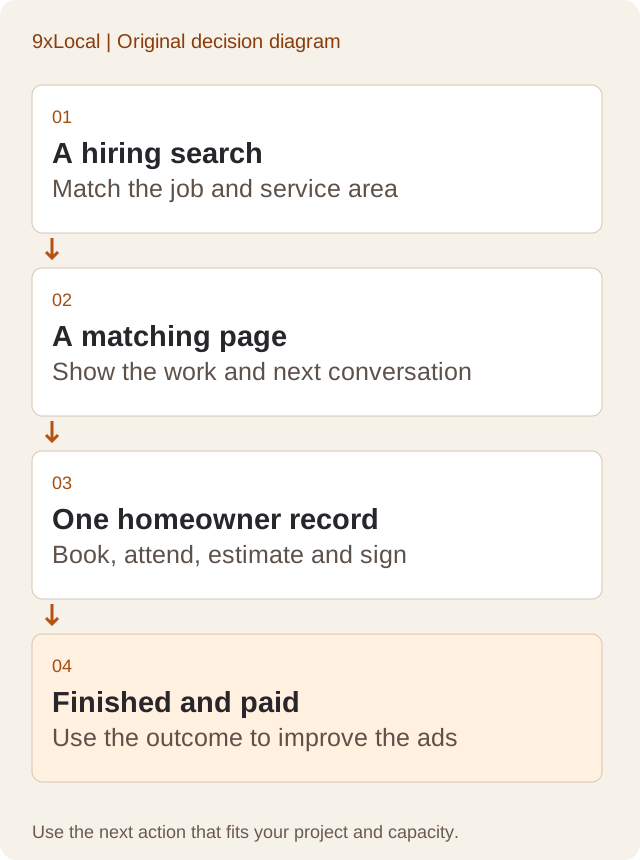
How soon should you judge it?
We usually have the first site or campaign version in your plan live within three working days of getting access and basic business details. Larger migrations or custom work need longer. Launch is the beginning of learning which inquiries fit.
I'd inspect searches, areas and tracking in the first week, then discuss the first conversations as they arrive. Fix obvious repair traffic or missed form delivery immediately. You don't need to wait for an addition to finish to repair a broken inquiry path.
Use later reviews for signed jobs and cost of winning the job. Keep those outcomes attached to the month the homeowner first contacted you. A project still in design belongs in open work, rather than being counted as lost or paid.
5 questions before hiring a PPC company
| Ask | How 9xLocal answers |
|---|---|
| Which job comes first? | Choose the service using your margins, coverage and available planning dates. |
| What happens with wrong searches? | Ongoing review in your plan uses the search terms and office feedback to adjust the campaign. |
| Who owns the account and pages? | Your business owns the accounts and content; website files are handed over if you leave. |
| Where does our money go? | A chosen package from $297/month, plus separate platform spend with no markup. |
| Who turns a request into a visit? | AI follow-up in your plan can book into your calendar or pass the inquiry to your office. |
Ask the provider to walk through one inquiry and one change they'd make after it. You'll learn more than from a promise about how many clicks the next report will show.
Questions homeowners ask AI assistants
These are example searches to answer on the pages behind your ads:
| Who builds additions nearby? | “Home addition builder [Town]” needs a clear service area and similar work. |
|---|---|
| Can I speak to someone without drawings? | “Addition consultation before plans” needs your first-call process. |
| Do you handle second stories? | “Second-story addition contractor [Town]” needs your capability and project proof. |
| When could planning start? | “Addition contractor planning availability” needs current dates and who to contact. |
| What changes the estimate? | “Home addition cost drivers” needs the decisions you'll assess before pricing. |
Those answers also help someone who arrives directly from an ad. Keep them consistent with what the office says.
Fix this before buying more clicks
If nobody can answer new inquiries, assign a reply owner and backup first. If the design calendar is full, change the available planning window before attracting more visits. If the site hides the service area, repair that before expanding coverage.
Use the broader lead generation service when the main problem crosses several sources and follow-up. More Google spend alone won't solve every gap between a homeowner and a booked job.
Prefer to manage it yourself?
Use our Google Ads for remodelers guide for keywords, LSA versus Search and campaign setup. Start with one service, test the response and keep the spending limit visible. The remodeling marketing plan puts that test beside referrals and unpaid search.
Frequently asked questions
Is advertising spend included in the package?
No. You pay Google directly. The management package you choose is separate, with no markup on the media.
Who owns the Google Ads account?
You do. Keep the business owner able to access the account and see the billing, campaigns and results.
Can I start at $10 a day?
Yes. That's within the offer, though it funds a small test. Match the service and expectations to the evidence that budget can gather.
Will a campaign guarantee signed jobs?
No. We run the chosen marketing and follow-up; your team assesses, prices and sells the construction work. Judge the plan by both lead fit and later job outcomes.
Your next step
Bring the remodeling job you want, towns served, a comparable project and your next consultation opening. We'll discuss the first campaign, matching page and monthly work in your plan. 9xLocal is your agency replacement for more booked jobs, with packages starting from $297/month and separate direct ad spend. See if we're a fit.
Sources
- Clutch: PPC Pricing Guide 2026. Verified October 30, 2026. Broad hourly management range.
- LocaliQ: 2025 Home Services Search Advertising Benchmarks. Verified October 30, 2026. General-contractor lead median and study sample.